
Streamers often use high stakes to create visual impact:
Top Twitch streamers average $50-$500 per single spin (e.g., "Roshtein" often plays at $1000/spin), far exceeding the typical player's small stakes of $0.25-$5.
Behind the scenes, most sign sponsorship deals with casinos, using "casino funds" for trial and error—a 2023 StreamElements report showed that 68% of top streamers are platform-sponsored, with the first $50,000 in losses covered by the backer (the "house money" myth).
The audience only sees the jackpot moments and ignores the long-term losses—one streamer broadcasted for 60 hours a month with only 2 big wins (totaling $80,000), while the remaining 58 hours resulted in a net loss of $32,000 (internal data).
Educational viewing should focus on learning strategies (such as symbol mechanics and RTP analysis) rather than imitating betting;
data shows only 15% of viewers can distinguish between entertainment and practical application (Juniper Research).
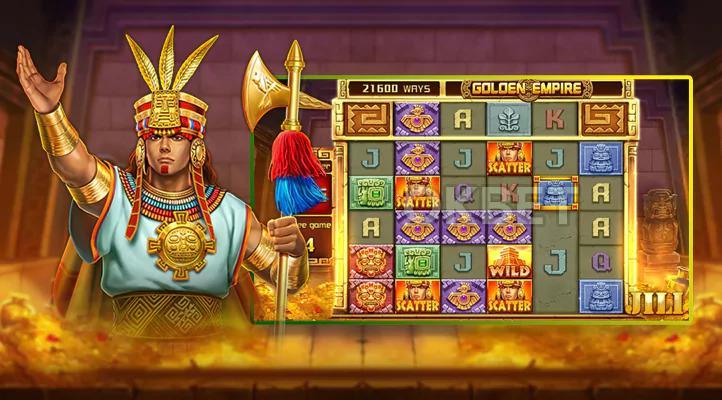
The High-Stakes Illusion: Why Streamers Play with Huge Bet Sizes
On streaming platforms like Kick or Twitch, top gambling streamers' single-spin bets normally stay between $500 to $1,500, creating a massive gap compared to the average player's betting habit of $0.50 to $5.00.
These high-stakes bets are usually not based on the streamer's personal wealth, but on “House Funds” (demo funds provided by the casino) or “Balance Refills” agreements.
Data shows that while the RTP (Return to Player) for top streamers is algorithmically consistent with regular users (typically 94%-96%), the zero-cost nature of their funding allows them to ignore the risk of total bankruptcy caused by high volatility.
By showcasing extremely rare high-payout footage, the primary income for streamers actually comes from a 30% to 50% revenue share (RevShare) after driving audience traffic to the casino, rather than profits from gambling itself.
Sources of Funds
The "Imaginary" Nature of Initial Balances
For the vast majority of gambling streamers, their account balance before starting a stream is not a real deposit through on-chain wallets (like MetaMask or Ledger), but a database value modified via the casino's backend management system.
Initial Allocation: Casinos allocate an initial credit of $100,000 to specific tiers of streamers. This money is listed as "marketing expense" in casino financial reports, rather than a "liability."
Withdrawal Lock: This type of funding usually comes with strict restrictions. Streamers can only withdraw the "net profit" portion that exceeds 20% or 50% of the initial balance. For example, if a streamer ends with $110,000, the actual reward they can take away is only $10,000.
Turnover Rate: To maintain engagement, casinos require streamers to complete at least 600 high-stakes spins per hour. Even calculated at 96% RTP, the theoretical attrition at this frequency is very fast, but because the initial funds are imaginary, this attrition is merely a database number change for the casino.
Differentiated Bonus Structures
When regular users deposit in crypto casinos, they usually only get a 100% match bonus and must complete a 40x wagering requirement.
The terms provided to streamers are completely detached from standard user agreements.
| Funding Component | Standard User Standard | Partner Streamer Standard |
|---|---|---|
| Deposit Bonus Ratio | 50% - 100% | 200% - 500% |
| Wagering Requirement (Wager) | 35x - 50x | 0x - 10x or Manual Waiver |
| Single Bet Limit | Restricted within $5 - $10 | No limit, supports $1,000+ |
| Rakeback Ratio | 5% - 10% | 25% - 45% |
Through backend adjustments, the streamer's Rakeback ratio is extremely high.
Every time a streamer spins for $1,000, regardless of winning or losing, the casino backend immediately returns $450 to their withdrawable account.
This high-frequency, high-ratio instant return ensures that even if the streamer encounters a streak of 50 consecutive dead spins, there is still a steady flow of funds to support the broadcast duration.
RevShare Agreements
The key to understanding streamer funding lies in the Affiliate Revenue Share percentage behind them.
Tiered Revenue Model:
Level 1 (0-50 active players): 30% net loss share.
Level 2 (51-200 active players): 40% net loss share.
Level 3 (200+ active players): 50% or higher share.
Negative Reset: In standard RevShare agreements, if an invited player wins money, the streamer's commission account shows a negative balance. However, in top streamers' contracts, casinos usually set a “Negative Reset” clause. For instance, if the player wins, the streamer loses nothing; if the player loses, the streamer immediately takes half.
This extremely asymmetric game model provides streamers with plenty of confidence to showcase daily losses that frequently reach $50,000.
Because as long as there are more than 5,000 viewers in the stream, the base of players registered through their affiliate links generating losses is enough to cover the on-paper losses of the stream within 24 to 48 hours.
"Secondary Production" Value
A shot of a $1,000 bet triggering a 1,000x payout (i.e., a $1,000,000 jackpot) has incredible viral potential on social media.
These types of videos on TikTok and Instagram Reels often reach millions of views.
Editing Cost Analysis: The cost for a casino to produce such ads is high and lacks authenticity. By using streamers for "live gambling," the casino only needs to provide a virtual balance to exchange for dozens of high-quality jackpot clips.
Traffic Conversion Rate: The CTR (Click-Through Rate) for these high-jackpot videos is 15 times higher than traditional banner ads. Every potential user who clicks into the casino has an average LTV (Lifetime Value) between $800 and $1,200.
Some smaller casinos provide streamers with an independent RTP setting.
Although publicly claimed to be 96%, on a streamer's specific account—due to a lack of third-party real-time auditing—the casino can manually trigger Bonus Games at a higher frequency.
Survival is Not Dependent on Winning
Revenue Share
Unlike the 5%-10% sales commission in traditional e-commerce, the commission rates in the gambling industry are staggeringly high because they are based on the user's NGR (Net Gaming Revenue), which is the user's net loss.
Tiered Commission Structure:
Casino affiliate agreements usually use a dynamic tiered system. As the number of referrals and turnover increases, the share ratio rises exponentially.
| Active Players | Net Loss Share (Commission %) | Estimated Monthly Income (Assume $300 loss per person) |
|---|---|---|
| 0 - 50 | 25% | $3,750 |
| 51 - 200 | 35% | $21,000 |
| 201 - 1,000 | 40% - 45% | $120,000+ |
| 1,001+ (Top Streamers) | 50% (Top Private Agreement) | $300,000+ |
Permanent Binding Rights:
Promotion links for most crypto casinos have a “Lifetime Revenue Share” attribute. A user registered through a streamer's link in January 2024 who is still playing in 2026 will still have all their losses settled monthly to the streamer. This long-tail effect gives veteran streamers an extremely high passive income pool; even if they stop streaming for a month, backend commissions might still exceed $50,000.
No Negative Carryover
In standard business collaborations, if a partner brings a loss, it is usually shared.
However, in top gambling streamer agreements, there is a protective clause called No Negative Carryover.
Scenario Assumption:
In a certain month, a "whale" player recommended by the streamer gets lucky and wins $200,000 from the casino.Standard Agreement: The streamer's commission account shows -$100,000 (assuming 50% share). Commissions in subsequent months must first fill this massive hole before starting to profit.
Streamer Privilege Agreement: On the 1st of the following month, this negative balance is automatically reset to 0 by the system.
CPA and Hybrid Models
In addition to relying on user losses via RevShare, many streamers sign CPA (Cost Per Acquisition) or Hybrid agreements to ensure income stability.
CPA Trigger Mechanism:
As long as a user completes registration and deposits the minimum threshold (usually $20 to $50), the casino pays the streamer a one-time fixed fee regardless of the user's subsequent wins or losses.Tier 1 Countries (e.g., Canada, Germany): CPA unit price can reach $150 - $250.
High-Value Crypto Users: Some platforms provide CPAs up to $500 for users with verified wallet addresses.
Hybrid Strategy:
For example, “$100 CPA + 30% RevShare”. This mode guarantees a per-head acquisition fee while retaining long-term dividends as users become engaged. For streamers with massive traffic but uncertain user stickiness, this is the optimal risk-avoidance solution.
Flat Fee Retainer
For top influencers on Twitch or Kick (with 100k+ followers), casinos don't just see them as sales, but as brand advertising slots.
Therefore, in addition to performance-based commissions, casinos pay a Fixed Monthly Retainer.
Contract Duration and Requirements:
Monthly Salary Range: Mid-tier streamers $10,000 - $30,000; top-tier streamers (like the Adin Ross level) have had contracts leaked with monthly salaries as high as millions of dollars.
Hard Indicators: Must stream specific slot content for 20 - 40 hours per week; must display the casino logo in a fixed position on the screen; must verbally promote a promo code every 15 minutes.
A database of 5,000 active players is like a mid-sized public company, capable of generating a continuous cash flow.
For every $1,000 the streamer loses in a broadcast, these 5,000 players may have collectively lost $50,000 in the same period, contributing $20,000 in real-time income to the streamer.
Survivorship Bias: You Only See the Jackpot, Not the Massive Losses
In crypto gambling data samples, the "5000x" or "Max Win" screenshots circulating on social media account for less than 0.001% of actual game rounds.
Although some slots based on Ethereum or Solana claim an RTP (Return to Player) as high as 99%, this is typically based on a simulation average of 1 billion spins.
In a typical user session consisting of 500 to 1000 spins, extreme Volatility causes the capital curve to show an "L-shaped" trend.
The platform's front-end algorithm automatically captures and displays large profit data, while losing rounds—which account for over 90% of total transaction volume—are systematically collapsed or ignored.
Deviations in Probability Distribution
The Fallacy of Statistical Sample Size
The RTP (e.g., 97%) labeled on crypto gambling platform game pages is a long-term statistical indicator.
Laboratory Test Scale: When developers certify a slot algorithm, they usually perform 100 million to 1 billion simulated spins to ensure payout expenditures align with the preset mathematical model.
Actual User Operation Scale: An average player usually spins between 100 to 5,000 times during a single game session.
In a sample of 1,000 spins, the actual return rate observed by the player can fluctuate between 10% and 500%.
Since crypto slots are often designed with "High Volatility," the system automatically allocates a large portion of the payout quota to a very small number of "Jackpot" commands.
This leads to most players' account balances hitting zero before they ever reach the mathematical average return line.
Volatility Levels
Currently, mainstream crypto-native slots (such as products provided by certain well-known developers) tend toward "Extreme Volatility."
Comparison of Capital Depletion Models under Different Volatility Levels
| Volatility Level | Typical Characteristics | Capital State Prediction after 1000 Spins | Target Group |
|---|---|---|---|
| Low | Frequent small payouts, ratios mostly 0.5x - 5x | Balance usually remains at 80% - 95% | Recreational players |
| Medium | Relatively balanced prize distribution | Balance fluctuates wildly, remains at 50% - 110% | Intermediate players |
| High | Long periods with no returns, occasional 1000x+ bursts | Balance has a very high probability of hitting zero midway | Jackpot-chasing speculators |
Under a high-volatility model, a player must prepare a principal of at least 500 times the single bet amount to potentially last until an effective Bonus Round.
Paytable Traps
Low-tier Symbols: Occupy 70% - 80% of the reel combinations. Their payout is usually lower than the single bet amount (e.g., bet 10 USDT, return 2 USDT). These payouts are psychologically termed "Losses Disguised as Wins" (LDWs); while it looks like the player won, the capital is essentially depleting at an 80% rate.
High-tier Symbols and Wilds: Appearance probability is typically locked below 1%.
Scatters/Bonus: The probability of triggering Free Spins is usually set between 1/100 to 1/400.
Free Spins and Bonus Buys
A major feature of crypto slots is allowing players to pay 80x, 100x, or even 500x their principal to buy a "Bonus Round."
Purchase Cost: Assuming a single bet of 1 USDT, a bonus buy requires paying 100 USDT.
Earnings Distribution: In tens of thousands of purchase experiments, approximately 70% of bonus rounds produced prizes lower than the purchase cost.
Extreme Deviation: Only about 5% of bonus rounds generate returns exceeding 200 times.
Buying bonuses merely shortens the losing process, compressing capital that would have taken 200 spins to consume into a single high-risk gamble.
Social Media and Front-end Presentation
The "Winning Window"
When you open the homepage of any mainstream cryptocurrency casino, the "Live Feed" of winnings you see is not a real real-time transaction stream, but a carefully designed marketing component.
Multiplier Threshold: Only bet slips with return multipliers exceeding 50x or 100x are captured.
Amount Threshold: Only bet slips with a net profit exceeding 100 USDT or 0.01 ETH are pushed to the front-end.
Masking Loss Streaks: Losing streaks are discarded at the data transmission layer and do not occupy front-end rendering resources.
Data shows that on a platform with 10,000 Daily Active Users (DAU), about 50 bets are generated per second, 45 of which are likely losses or tiny returns (below the principal).
Comparison between Real Data Stream and Front-end Display Stream
| Data Dimension | On-chain Data | Front-end UI |
|---|---|---|
| Transactions Per Minute | 3,000 transactions | Displays about 20 selected data points |
| Includes Losing Transactions | Yes (Ratio >95%) | No (0%) |
| Includes Invalid Bets | Yes (Payout < Principal) | No |
| Jackpot Percentage | < 0.05% | 100% (Profit only) |
LDW
In addition to masking loss data, front-end design uses audiovisual effects to package "losses" as "victories."
In the industry, this is known as LDW (Losses Disguised as Wins).
When a player bets 2 USDT on a crypto slot and the final spin returns 0.5 USDT, although the player actually lost 1.5 USDT (a 75% principal loss), the front-end interface still triggers a "winning" animation.
Visual Stimulation: Special effects explode on the screen, and numbers start scrolling up rapidly.
Auditory Feedback: Cheerful music and coin-dropping sound effects play, in the same tone as a major jackpot.
Delayed Settlement: The settlement animation duration is lengthened, allowing players to immerse themselves in the illusion of winning for several seconds.
Share-to-Earn
Crypto casinos generally have a community incentive system.
Posting Rewards: As long as a player shares a screenshot of a profit exceeding 100x on a group or social platform with specific copy, they can contact customer service to receive a bonus ranging from 5 USDT to 50 USDT.
Sunk Cost: No platform rewards players for sharing screenshots of losses. On the contrary, in many community rules, complaining about losses is seen as "killing the vibe" and may result in restricted speaking privileges.
In a typical crypto gambling community channel, 500 profit screenshots might be uploaded daily, creating an illusion of "everyone is winning."
In reality, these 500 screenshots may come from 50,000 players; the remaining 49,500 losing players remain absolutely silent due to a lack of rewards and psychological factors.
Psychological Blurring of Cryptocurrencies
Decimal Deviation
Traditional casinos use integer combinations (e.g., 10 Dollars, 100 Euros), whereas the mainstream unit of account in crypto casinos is usually to three or even four decimal places.
Anchor Effect Failure: When players are used to fiat prices in life (e.g., $5 for a coffee), the original value anchor completely fails when facing a single bet of 0.00015 BTC. Visually, "0.00015" looks like a tiny number, almost zero.
Bet Amount Inflation: Data indicates that when accounts are displayed in BTC, the average single bet amount is 30% to 50% higher than when switched to USD display. Players subconsciously feel a 0.002 BTC bet is "insignificant," despite its actual value possibly being over $100.
Comparison Table of Visual Value vs. Actual Purchasing Power
| Crypto Display | Visual Impact | Real World Value | Psychological Suggestion |
|---|---|---|---|
| 0.0005 BTC | Extremely Weak (Like pocket change) | Approx. 50 USDT | “It's just spare change” |
| 0.01 ETH | Weak | Approx. 35 USDT | “Just a normal click” |
| 0.2 SOL | Medium | Approx. 40 USDT | “Increase the bet a bit” |
| 5000 SATs | Strong (Large number) | Approx. 3 USDT | “I'm high rolling” (Reverse illusion) |
Volatility Masking
Neglect Effect in Bull Markets: Suppose a player deposits 1 ETH (worth 3000 USDT at the time). During play, they lose 0.1 ETH (leaving 0.9 ETH). Meanwhile, the ETH market price rises by 12% to 3360 USDT. At this point, the fiat value of the player's account is approximately 3024 USDT.
Result: The player actually lost 10% of their chips on the slot, but the fiat value of their total assets increased.
Attribution Bias in Bear Markets: When coin prices drop, players tend to blame the account shrinkage on "bad market conditions" rather than their losses on the slots.
Mental Accounting
Richard Thaler's Mental Accounting theory is amplified to the extreme in crypto gambling.
For many early crypto holders or players who profited from Airdrops or trading, their crypto assets are categorized as “House Money”.
Psychological Isolation of Fund Sources: 1000 USDT earned as salary is obtained through labor, which players cherish; 1000 USDT in profit earned from MEME tokens is psychologically viewed as "free money."
Increased Pain Threshold: When using this "profit capital" for gambling, the sense of loss aversion is significantly reduced.
High Risk Preference: This mental accounting leads to more aggressive betting strategies. Data shows that accounts topped up with crypto profits have an average Volatility Preference 2.5 times higher than accounts topped up via credit card.
Satoshi/Wei Numerical Confusion
To solve the issue of BTC units being too small, some casinos introduce "Satoshi" or micro-units as display options.
When 0.001 BTC is displayed as 100,000 Sats, the number instantly inflates.
Reverse Illusion
Players seeing "millions" of points/credits in their account develop an illusion of extremely abundant funds.
Consumption Numbness
In an account showing 1,000,000 credits, a single bet of 5,000 credits looks like only 0.5% of the total. It is difficult for players to intuitively feel the real fiat purchasing power behind these 5,000 credits.
Educational Streaming: How to Watch and Learn Without Losing Money
On platforms like Kick or Twitch, top streamers perform over 500 spins per hour.
By observing popular games from developers like Pragmatic Play or Hacksaw Gaming, you can record the actual performance of RTP (Return to Player) after thousands of spins to verify if it nears the theoretical 96%.
This passive observation helps you quantify the average return multiplier of the Bonus Buy feature—which usually requires paying 100x or even 500x the base bet.
Relying on this real-world data, you can calculate the specific capital volume needed to sustain play without consuming USDT or BTC.
Real-time Database
High-Frequency Spinning
Average players clicking the spin button manually play a round every 5 to 10 seconds, completing about 300 to 400 spins per hour.
In streaming, streamers typically use the Autoplay feature with accelerated mode, increasing spins to over 1,200 per hour.
If you open 3 different streamer windows simultaneously, you can observe a sample of 3,000 to 4,000 spins in one hour.
The game progress a streamer shows in one night is equivalent to a casual player's game volume for a month.
You don't need to spend weeks testing the bonus trigger frequency of Book of Dead yourself.
Simply review the streamer's past hours of recordings (VOD), tally the number of Bonus Round entries, and divide by total spins to get a relatively accurate "Hit Rate."
If data shows a bonus triggers every 350 spins on average, but your budget only allows for 200 spins, mathematics tells you not to touch that game.
Bonus Hunt
“Bonus Hunt” is a common format in crypto gambling streams:
Streamers will play multiple games consecutively, triggering free spins but not starting them immediately, instead "saving" them until 20 to 50 bonuses are collected to open them all at once.
You can create a simple spreadsheet to record the following data points:
| Data Point | Description | Example Value |
|---|---|---|
| Cost | Cumulative bet or purchase fee to trigger the bonus | 500 USDT |
| Final Payout | Actual amount received after free spins end | 35 USDT |
| ROI | Final payout divided by cost | 0.07 (i.e., 93% loss) |
| Breakeven Rate | Proportion of bonuses in a set that return more than the cost | 20% (10 out of 50 bonuses broke even) |
By observing a Bonus Hunt with a total value of $50,000, you might find the final return is only $25,000 (50% RTP).
More importantly, look at median data: averages are often pulled up by a single 5,000x jackpot, but in 50 bonuses, 40 might have returns lower than 30% of the cost.
RTP Trackers
Many professional streamers display third-party RTP tracking plugins (like SlotBot or various Casino Trackers) on screen.
These plugins read game data in real-time, showing current "Live RTP."
The 96% RTP claimed by providers like Pragmatic Play is based on 1 billion simulated spins.
In a stream, you will often see:
Down Cycles: A game's live RTP drops to 40% or lower after 2,000 spins. This demonstrates the process of rapid capital consumption.
Mean Reversion: You can observe how many jackpots or hours of continuous play are needed for the RTP curve to climb from 60% back to over 90%.
When you see a streamer lose $10,000 consecutively on Razor Shark with an RTP of only 12%, you realize that in the short term, mathematical probability isn't always on the player's side, dispelling the "just a few rounds to win" mentality.
Volatility
Game developers usually only label volatility as "High," "Medium," or "Low," which is very vague.
Streaming helps you quantify these adjectives into specific "Dead Spins."
Using NoLimit City games (like San Quentin or Mental) as examples, these "Extreme Volatility" games show very extreme characteristics in streams.
You'll often see 100 consecutive spins where 95 yield 0 return, and the remaining 5 don't exceed 1x the bet.
By observing, you can set specific risk parameters:
Max Consecutive Dead Spins: Record how many times a streamer spins consecutively without any return (0.00). If it's 20 times and you bet $5 per spin, your $100 could vanish in 1 minute.
Base Game Return Rate: How long can the base game sustain funds without triggering bonus modes? Some games' base games give almost nothing, relying entirely on bonuses; while others (like Starburst style) give small prizes frequently. Streaming allows you to see this: does the balance drop in a straight line (reliant on bonuses) or a jagged line (base game support)?
In slot design psychology, as long as there's animation and sound feedback, the brain treats it as a "win."
But the objectivity of stream data helps you see through this.
When a streamer bets $100 and "BIG WIN" flashes with coin animations, but the final number stops at $60, that is actually a $40 loss.
In a stream, you can calmly calculate the frequency of these "losing victories" as an observer.
If a game frequently produces these "rewards" below the bet amount, it indicates the design intent is to mask capital loss through visual stimulation.
Evaluating Real Cost
Visualizing Volatility
When watching a streamer play a low-variance game (like Starburst or Gemix), the balance curve is jagged: frequent small wins (0.5x to 5x bet) make funds drop slowly with occasional recoveries.
But in high-variance games, the curve shows a "cliff-like" drop.
L-shaped Trend: This is typical of high-variance games. A streamer deposits 10,000 USDT, and over 40 minutes, the balance drops steadily to 2,000 USDT with almost no decent bounces.
Vertical Lift: Only upon a very low probability event (usually below 1/100,000) does the balance catapult back to 12,000 USDT or higher.
Combat Data Observation Point: Don't just focus on the second the streamer wins.
Record how much capital was consumed between "starting the game" and "first triggering a reward over 100x."
If a streamer bets $5 and loses $2,500 before a jackpot, the "entry ticket" for that game is 500x the stake.
For a player with only a $200 budget, playing this game is mathematically equivalent to a donation.
Base Game
High-variance game algorithms tend to allocate most of the RTP weight to Bonus Features, resulting in the Base Game RTP being squeezed extremely low.
Assume a game's theoretical RTP is 96%.
Bonus Feature Weight: Might take up 70% of the RTP.
Base Game Weight: Only takes up 26%.
As long as you haven't entered the bonus feature, you are effectively playing a game with an RTP of only 26%.
| Phenomenon | Description | Stream Verification Method |
|---|---|---|
| Dead Streaks | Consecutive 0-return spins. | Counter stats: You'll often see 15-20 spins with zero returns. |
| Trash Wins | Profit less than bet amount (e.g., 10 in, 0.2 out). | Count frequency of "wins" below 1x per 100 spins. Often as high as 40%. |
| Capital Half-life | Time taken for funds to halve. | Record spins for balance to drop from 100% to 50%. In high-variance games, this can take only 300 spins. |
Bonus Buying
Using Pragmatic Play's Gates of Olympus as an example, the cost of buying a bonus is 100x the bet.
Observing 50 consecutive buys on Sweet Bonanza or similar (requiring huge capital from the streamer), you'll see this distribution:
Devastating Loss (< 10x): About 20% of buys return less than 10% of the cost. Spend $100, get back $5.
Normal Loss (10x - 60x): About 50% of buys return between 10% and 60% of cost. Still a loss.
Minor Breakeven (60x - 120x): About 20% fluctuate around the cost line.
Profit Zone (> 120x): Only about 10% of buys bring real profit.
You need the psychological prep and capital depth to withstand a 90% loss probability to chase that 10% profit chance.
If you only have money for 3 buys, watching a stream will show you the bankruptcy probability is 72.9% (0.9 * 0.9 * 0.9).
Max Drawdown
Don't look at how much the streamer won; look at how much they lost before winning.
Suppose Streamer A starts a new high-variance game:
Starting Balance: 20,000 USDT
Lowest Balance: 4,000 USDT (at spin 2,300)
Final Balance: 25,000 USDT (at spin 2,350, triggering a jackpot)
While the result is profit, the Max Drawdown of this game was 16,000 USDT.
If your principal was only 10,000 USDT, you would never see the result of spin 2,350 because you would have busted around spin 2,000.
If a game frequently shows a drawdown exceeding 300x the bet in a stream (e.g., $10 bet, $3,000 drawdown), then for a player with only 100x the bet in principal, this isn't just high risk—it's certain suicide.