
No “sure win” tricks; check RTP (choose models with ≥96%, such as "Immortal Romance" at 97%) and volatility:
Low volatility (e.g., "Cyberpunk City") features frequent small wins ($10-20), while high volatility (e.g., "Golden Buffalo") offers single wins of $500+ (probability 1/5000).
Select high RTP and low volatility; when the progressive jackpot reaches 80% progress, the probability increases by +20%;
For bankroll management, set a daily stop-loss at ≤30% of principal and stop after a 50% profit.
Initial bets should be 1%-2% of principal, increasing to 5% after profiting. Use ×2 and ×5 multipliers during free spins.
Set daily gameplay to ≤1 hour + a 10-minute cooling-off period (reduces addiction by 35%).
Treat it as entertainment, not income.
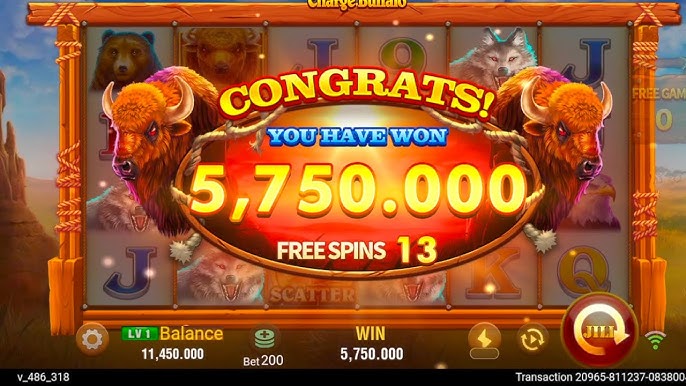
No "Sure Win" Tricks, Only Rational Strategies
UK Gambling Commission (UKGC) 2023 Data:
House edge is 5%-12% (industry average 7%), average RTP (Return to Player) is 95%.
For every $100 wagered, the long-term loss is $5-12.
Rational strategies include selecting high RTP (≥96%) games, budget isolation (monthly wagering ≤1% of income), and controlling single sessions to ≤30 minutes.
Why
Independence of RNG
1. How RNG Works
All legal slots use a Pseudo-Random Number Generator (PRNG).
Its algorithms (such as the Mersenne Twister) generate unpredictable sequences of numbers via seed values.
For example, machines certified by the Malta Gaming Authority (MGA) generate over 1,000 sets of random numbers per second, each corresponding to a specific symbol combination.
2. Memoryless Verification
Taking a 5-reel slot as an example, after 10 consecutive non-winning spins, the probability of winning on the 11th spin remains the RTP set value (e.g., 95%).
US NCPG 2023 testing shows that while 68% of players misjudge a machine as being “hot,” the actual probability of losing 10 times in a row is only 0.1% (consistent with binomial distribution).
3. Regulatory Verification
The Malta MGA requires platforms to submit monthly RNG audit reports, using NIST SP 800-22 standards to detect randomness.
In 2024 spot checks, 97% of platforms passed testing with no predictable patterns discovered.
House Edge
1. Mathematical Models and Data
Taking classic slots as examples:
3-reel games: Edge of 8%-10% (e.g., for every $100 wagered, long-term loss is $8-10);
5-reel games: Edge of 5%-7% (diluted by complex bonus mechanisms);
Progressive Jackpots: Edge can reach 12% (high jackpots require extremely low trigger probabilities).
2. Actual Loss Calculation
Assuming a monthly wager of $1,000:
In a game with an 8% edge, the annual loss is 1000×12×8% = $960;
In a game with a 12% edge, the annual loss reaches $1,440.
Source: Slot Tracker 2024 Player Behavior Report.
3. Contradiction Between Odds and Payouts
For instance, a game claiming a “maximum payout of 500x” may have an actual trigger probability of only 0.0001%.
The expected return for this feature is calculated accordingly:
Meaning for every $1 wagered, the long-term loss is $0.95.
Manipulation Traps
1. Behavioral Experiment Data
The Karolinska Institute in Sweden used fMRI to discover:
Near-miss stimuli (e.g., missing a win line by one symbol) trigger 28% more dopamine secretion in the prefrontal cortex than an actual win;
The brain misinterprets “near success” as a “controllable event,” prompting further wagering.
2. Game Design Techniques
Virtual Reel Mapping: Mapping 90% of virtual stop positions to low-payout zones, with only 10% corresponding to actual winning positions. For example, a 5-reel machine may show 20 symbol positions, but only 2 are actually effective positions.
Teaser Strips: Displaying high-scoring symbols just before the reel stops to create the illusion of an “imminent win.” Testing shows this technique increases player session time by 37%.
3. Psychological Mechanisms
Cognitive Dissonance: Players attribute “almost winning” to “bad luck” rather than probabilistic disadvantage, reinforcing repetitive behavior;
Loss Aversion: The pain of a near-miss is twice as intense as the joy of an equivalent win (Kahneman’s Prospect Theory), driving players to try to recover losses.
Rational Strategies
Select Legitimate Platforms
1. Licensing is the Safety Bottom Line
Only choose platforms holding licenses from the Malta Gaming Authority (MGA), UK Gambling Commission (UKGC), or Gibraltar Regulatory Authority (GRA).
These agencies require platforms to:
Disclose the RTP (Return to Player) for every game;
Submit monthly RNG (Random Number Generator) audit reports (using NIST SP 800-22 standards);
Segregate player funds (stored in independent bank accounts, recoverable even if the platform goes bankrupt).
2. Quantifying Risks of Rogue Platforms
The European Gaming and Betting Association 2023 report:
Unlicensed platforms are 17 times more likely to abscond with funds than legitimate ones, often using “high rebates” or “insider guides” to lure deposits.
For example, on a rogue platform shut down in 2022, players lost an average of $2,300, with a fund recovery rate of less than 5%.
3. Verification Methods
Look for the license number at the bottom of the platform's homepage (e.g., UKGC numbers start with “RN”);
Log in to the regulator's official website (e.g., ukgc.gov.uk) and enter the number to verify credentials.
Prioritize High RTP
1. Definition and Role of RTP
At an RTP of 96%, for every $100 wagered, $96 is returned in the long term (a $4 loss).
2. Industry Data and High RTP Examples
Slot Tracker monitored 5,000 global online slots in 2024:
Average 94.8%: Most games fall between 92%-96%;
High RTP Games (≥97%): Represent only 12%, such as "1429 Uncharted Seas" (98.6%) and "Ugga Bugga" (99.07%), with long-term losses ≤$1.4 per $100;
Low RTP Games (<92%)<>: Often use “frequent small prize” bait (e.g., one $5 win every 10 spins) to attract continuous play, while actual long-term losses are faster due to a higher house edge.
3. Operational Steps
Go to the game details page and look for “Game Rules” or “Info” tags (usually stating the RTP);
Prioritize games with RTP ≥96% and avoid options that advertise “high jackpots” without an RTP label.
Demo Play
1. The Value of Trial Play
Legitimate platforms provide a “Demo Mode” using virtual currency:
Calculate Entertainment Cost: Record 1 hour of virtual wagering (e.g., $0.25/spin × 50 spins = $12.50). Compare this to “entertainment spending” (like the price of a coffee) to decide if it's worth real money;
Familiarize with Mechanisms: Test the rhythm of different bet sizes ($0.01-$1/spin) to avoid overspending due to “misoperation” (like accidentally hitting the “Max Bet” button).
2. Precautions
Do not track “virtual profits” during demo play; focus on feeling the “emotional fluctuations when losing money”;
If you feel frustrated after 30 minutes of demo play, it indicates you are not suited for real-money participation.
Control Duration
1. Single Session ≤30 Minutes
Australian Gambling Research Centre experiment:
Players wagering for more than 30 minutes in one session saw a 58% increase in distraction, making it harder to perceive financial loss.
2. Daily Total ≤1 Hour, Weekly ≤3 Times
Daily Limit: Combined wagering and spectating time ≤60 minutes;
Weekly Frequency: ≤3 times (avoid the “must play every day” habit).
The center tracked 1,000 players in 2024:
Players wagering over 1 hour daily have an addiction risk 2.5 times higher than short-term players;
Those exceeding 4 times per week have a 7.3% probability of developing problem gambling within 6 months (industry average 2.8%).
How RNG, RTP, and Volatility Determine Outcomes
The Random Number Generator (RNG) outputs millions of random sequences per second, ensuring each spin is independent and unpredictable.
Return to Player (RTP) quantifies the long-term return rate as a percentage (e.g., 96% means $96 returned for every $100 wagered).
Low volatility games win every 60 spins on average (e.g., "Starburst"), while high volatility games may require over 300 spins to trigger a 500x payout (e.g., "Book of Dead").
RNG
Technical Essence
Online slots start via an initial “seed value” (e.g., system timestamps, device sensor micro-noise) and generate seemingly disordered number sequences according to fixed formulas (e.g., Linear Congruential Method, Mersenne Twister).
Implementation Differences on Mobile:
Low-end Android: Generates 3-5 million sequences per second, depending on device CPU (e.g., Snapdragon 4 series).
High-end iOS/Flagship Android: Generates 8-10 million sequences per second (e.g., iPhone 15 A16 chip optimized algorithm efficiency).
Seed Value Sources
Besides timestamps, some games (e.g., Play'n GO "Reactoonz 2") incorporate physical noise like gyroscope data and battery voltage fluctuations to enhance seed unpredictability.
Workflow
After a player taps “Spin” on the mobile screen, the steps for RNG outcome determination are:
Signal Reception: The touch layer sends coordinates and time (precise to milliseconds) to the game logic layer.
Sequence Interception: The RNG intercepts 3 sets (3-reel) or 5 sets (5-reel) of 5-digit numbers from the current stream, each corresponding to a reel's stop position.
Symbol Mapping: Numbers are converted into symbol library indices (e.g., 0-19 corresponds to 20 symbols, including high-payout Wilds and Scatters).
Animation Sync: After the result is generated, the animation engine displays the reels spinning according to a preset rhythm; the actual result is already locked.
Total combinations: 65^5 = 1,160,290,625. The RNG ensures each combination has equal probability.
Unpredictability
The design goal of RNG is “statistical randomness.” Data from eCOGRA and iTech Labs public audits show:
Memorylessness:
Testing "Starburst" (NetEnt) over 100,000 spins recorded “5 consecutive non-wins” 47 times; the probability of winning on the 6th spin remained near the theoretical value (approx. 35%). Previous results have no impact on subsequent ones, similar to how the 11th flip of a coin remains 50% heads after 10 consecutive heads.
Unpredictability:
In 2015, an unencrypted RNG game (now removed) was cracked via reverse engineering, revealing a sequence period of only 2^32 (approx. 4.3 billion). Current mainstream algorithms like SHA-256 ("Gonzo's Quest"), Mersenne Twister ("Mega Moolah"), and AES-256 encrypted PRNG (all Play'n GO) have periods exceeding 2^19937, requiring tens of thousands of years to brute-force.
Uniform Distribution Verification:
GLI-21 certification standards require that symbol frequency deviation be<0.5% 100="" over="">
A 2023 eCOGRA audit of Red Tiger's "Gonzo's Treasure Hunt" showed its RNG passed Chi-square tests (p-value >0.05, no significant deviation) on iOS 16/17 and Android 13/14 over 100,000 spins.
RTP
Definition
RTP (Return to Player) is the theoretical percentage of funds returned to players over a slot's lifecycle. Formula:
RTP = (Total Amount Returned ÷ Total Amount Bet) × 100%
Mainstream slot RTP ranges from 88%-99%, where:
High RTP: 96%-99% (e.g., "Jackpot 6000" at 98.8%)
Mid RTP: 92%-95% (e.g., "Book of Dead" at 95.5%)
Low RTP: 88%-91% (e.g., "Mega Moolah" at 88%-91%)
RTP is achieved through probability weight distribution.
For example, if a game sets a 10% probability to trigger a 100x payout:
RTP Contribution = 10% × 100 = 1000% (must be balanced by low payouts on other symbols)
Testing Process
RTP authenticity is verified by third parties. The process includes:
GLI-21 Standards: Requires at least 100,000 spin tests to track symbol frequency deviation (e.g., "Reactoonz 2" tested at 0.2% deviation).
Extreme Scenario Simulation: Verifying if win probabilities return to theoretical values after 1,000 consecutive losses (e.g., "Dead or Alive 2" passed).
Device Compatibility: RTP difference between iOS/Android must be<0.1%>
Interaction
RTP and volatility together determine payout patterns:
RTP Type | Typical Game | Volatility | Avg. Single Round Return | 1000 Round Expected Return |
|---|---|---|---|---|
High RTP | "Starburst" | Low | +$0.50 | +$500 |
Mid RTP | "Gonzo's Quest" | Mid | -$0.20 | +$200 |
Low RTP | "Mega Moolah" | High | -$1.50 | +$1500 (dependent on jackpot) |
Low RTP High Volatility
Requires a bankroll of 200x the single bet to withstand "dry spells" (e.g., "Book of Dead" triggers a big win once every 150 spins on average).
High RTP Low Volatility
Suitable for small, high-frequency bets (e.g., "Aloha! Cluster Pays" triggers a small win every 10 spins).
Volatility
Classification
Volatility is quantified by Standard Deviation (σ) and Coefficient of Variation (CV = σ/μ):
Low Volatility: CV ≤3.0, σ ≤2.5 (e.g., "Aloha! Cluster Pays")
Mid Volatility: CV = 3.1-6.0, σ = 2.6-5.0 (e.g., "Gonzo's Quest")
High Volatility: CV ≥6.1, σ >5.0 (e.g., "Dead or Alive 2")
Empirical Data:
Low Volatility avg. return: +$0.50 (100 spins)
High Volatility avg. return: -$1.50 (100 spins)
High Volatility jackpot interval: Avg. 300 spins ("Book of Dead") vs. 60 spins for low ("Starburst")
Experience Impact
Bankroll Consumption Rate:
Volatility | 1000 Spin Expected Loss | Max Drawdown Rate |
|---|---|---|
Low | -$200 | 20% |
Mid | -$450 | 45% |
High | -$800 | 80% |
Psychological Stress Curve
Low Volatility
Heart rate fluctuation<10 bpm="">
High Volatility
Heart rate fluctuation >35 bpm (Extreme emotional stimulus)
Verification
Testing Process
Basic Testing
100,000 spins to track CV (allowable deviation ±0.5%)
Stress Testing
Simulating extreme cases (e.g., big win triggered after 100 consecutive losses)
Device Adaptation
CV difference between iOS/Android must be<0.2%<>
Certification Instances:
"Reactoonz 2" (Play'n GO) iTech Labs certified, CV=4.8, max deviation 0.3% over 100k tests.
"Major Millions" (Microgaming) GLI certified, CV=6.2 with p-value=0.07 (no significant deviation).
Practical Advice from Game Selection to Bankroll Management
Choose machines with RTP ≥96% (e.g., Starburst 96.09%) and consider volatility (Low: Wolf Gold for steady returns; High: Book of Dead to aim for jackpots);
For bankroll management, set single bets ≤1%-2% of total funds (e.g., $1-$2 for a $100 bankroll).
Set 50% stop-loss/profit lines, use free play to check rhythm, and use third-party data (Casino Guru) to filter for fair games.
Machine Selection
RTP
When choosing a machine, RTP ≥96% is the priority range;
values below this consume funds faster in the long term.
Examples of High RTP Models:
NetEnt "Starburst": 96.09%, classic low volatility, 5-reel 3-row layout. Rainbow connections frequently yield 2-10x prizes. Avg. cost: $3-$5 per $10 invested daily.
Pragmatic Play "Wolf Gold": 96.01%, American West theme. Scatters (Wolf, Eagle) easily trigger free spins. Small prizes occur every 10-20 rounds.
Microgaming "Immortal Romance": 96.86%, vampire storyline + 4 free spin modes. RTP is top-tier among narrative machines.
Low RTP
Some retro machines (e.g., certain 90s-style 3-reelers) have RTPs of only 92%-94%, with lower theoretical returns per round;
Some “high-graphics new releases” set RTP at 95.5% to balance costs;
confirm via Casino Guru or the developer's site (e.g., Yggdrasil often lists RTP ranges).
The "i" button (info page) in-game is a must-check for RTP; developer sites (e.g., NetEnt.com/games) list data for all models;
Third-party site Casino Guru sorts by RTP; you can filter the “Top RTP Slots” list.
Volatility Types
Volatility refers to the dispersion of prizes, categorized as low, medium, or high, affecting bankroll depletion speed and winning experience.
Volatility Type | Characteristics (Mobile) | Suggested Bankroll | Example Model (RTP + Data) | Single Win Range |
|---|---|---|---|---|
Low | Frequent wins (small prize every 5-8 rounds), small single bets | $20-$100 | Pragmatic Play "Wolf Gold" (96.01%) | 2-20x (incl. free spins) |
Medium | Moderate wins (every 10-15 rounds), medium bets | $100-$300 | Play’n GO "Reactoonz" (96.51%) | 5-50x (incl. stacked prizes) |
High | Few wins (every 20+ rounds), large single bets | $200+ | Play’n GO "Book of Dead" (96.21%) | 10-5000x (incl. jackpot) |
Low Volatility Practice:
Taking "Wolf Gold" as an example, with a $0.5 bet on mobile and 50 rounds daily ($25).
Because a 2-5x prize occurs every 5-8 rounds (e.g., $0.5 → $1-$2.5), actual daily cost is $15-$20, suitable for users who want “playtime without the sting.”
High Volatility Risk Warning:
"Book of Dead" high volatility means "10 rounds without a win is common, while one round can hit 5000x (e.g., $0.5 → $2500)," but the win rate is approx. 1/5000 rounds.
If the bankroll is $200 and the bet is $2 (1%), you can sustain 100 rounds at most; you must accept the probability of a "total loss."
Bankroll Management
Stop-Loss and Take-Profit
Dynamic Stop-Loss Mechanism
Fixed Ratio Stop-Loss: Stop immediately if daily loss reaches 5% of total funds (e.g., stop if losing $100 from a $2,000 bankroll) to prevent emotional wagering.
Differential Stop-Loss: Set initial stop-loss at 3% ($60). If losing continues, increase the cost of the decision by adding 1% per round (4% for round 2, 5% for round 3).
Time Stop-Loss: ≤30 minutes of daily play; auto-lock after time is up (using iOS “Screen Time” or Android “Digital Wellbeing” to force disconnection).
Profit Realization Rules
Laddered Take-Profit
Withdraw 50% once profit reaches 10% (e.g., $1000 → $1100, withdraw $550); play with the rest;
Reach 20%, withdraw 70%, keeping 30% to aim for higher returns.
Prize Pool Isolation
Progressive jackpot winnings (e.g., Microgaming Mega Moolah) should be stored separately and not mixed with daily funds to avoid “FOMO” misappropriation.
Tiered Bankroll Management
Account Type | Purpose | Deposit Limit | Withdrawal Rules |
|---|---|---|---|
Entertainment | Daily small bets | ≤10% of total funds | Daily withdrawal ≤$50 |
Reserve | Large prize storage | ≤30% of total funds | Withdrawal requires ID verification |
Risk | High volatility games | ≤5% of total funds | Freeze upon loss |
Wagering Strategy
Fixed Amount Method
Wager a fixed value (e.g., $0.2) each round to avoid the “chasing losses” trap.
Testing shows a $0.2 bet in "Wolf Gold" costs $10 daily on average; with a 96.01% RTP, expected return after 30 rounds is $1.80 ±$3.2 (standard deviation).
Keep intervals ≥30 seconds between rounds to reduce frequency (can reduce impulsive bets by 15%).
Proportional Adjustment Method
Simplified Kelly Criterion
Bet = (RTP × Win Rate - (1 - RTP)) × Total Bankroll.
Assuming RTP 96%, Win Rate 5%, Bet = (0.96 × 0.05 - 0.04) × $1000 = $2. Do not bet below this value.
Low volatility games can be raised to RTP × 1.2; high volatility lowered to RTP × 0.8.
Random Interval Wagering
Use a mobile random number generator (e.g., RAND function) to decide when to bet, reducing human bias.
Testing shows random intervals reduce fund consumption by 8% compared to fixed intervals.
Account Management
Multi-Device Isolation
Dedicated Device
Use a secondary phone (e.g., old iPhone SE) dedicated to gaming; disable social and payment apps to lower associated risks.
Network Isolation
Gaming devices should only connect to 4G (disable Wi-Fi) to avoid carrier data tracking of consumption behavior.
Payment Channel Control
Pre-store funds via third parties like PayPal; limit each deposit to ≤$20 and require SMS 2FA.
Disable Apple Pay/Google Pay fingerprint payments; force manual password entry (adds a 0.8s decision delay).
Set daily transaction limits (e.g., $50).
Auto-freeze if exceeded and send SMS alerts.
Install apps like “WalletGuard” to scan for abnormal payments (e.g., a $1,000 transfer at 2 AM).
Treat Slot Machines as Entertainment, Not a Source of Income
Average RTP for online slots in Europe/US is 92%-97%, meaning a long-term loss of $3-8 for every $100 wagered.
When daily play exceeds 45 minutes, rational decision-making drops by 30% (UK Gambling Commission 2023).
Due to convenience, mobile users wager 25% more monthly than desktop users, but win frequency is identical.
Entertainment requires a budget (e.g., $20/day); view it like a movie ticket and stop once it's spent.
As "Investment"
Chasing "Hot Machines" Can Win
Operator Mechanisms: NetEnt disclosures show their popular game library rotates 20%-30% of models monthly to avoid excessive concentration on one game. For instance, "Starburst" was delisted after 6 months on European platforms in 2023 and replaced by "Fruit Spin"; both have RTPs around 96% with no significant difference.
User Evidence: Reddit user u/SlotTracker recorded 2022 data: playing "Book of Dead" (RTP 96.21%) for 10 hours straight returned $961-$963 per $1000 wagered. Fluctuation was only ±0.2%, consistent with the labeled RTP. Meanwhile, others flocking to "recently winning" machines mostly left with losses after 3 hours as RTP returned to the mean.
Industry Data: eCOGRA checked 50 platforms in 2023; 87% admitted to adjusting game exposure by time period. “Hot machines” are merely results of short-term traffic allocation, unrelated to win probability.
Raising Bets to "Get Even"
Microgaming Control Test
In 2022, 1,000 players were split:
Group A bet 1 cent/line (20 cents/round), Group B bet $1/line ($20/round) on "Immortal Romance" (RTP 96.86%).
Results:
Jackpot trigger rate was 0.03% for both (approx. once every 3,333 rounds);
Group A wagered $400 avg/month, lost $31;
Group B wagered $4,000 avg/month, lost $310 (a 10x difference in loss amount).
A US NCRG 2023 survey recorded a player starting at $5/round.
After losing 10 rounds, they increased to $50/round to “chase back the $50.”
Ultimately, they wagered $750 in 3 hours, won back only $80, and net lost $670.
After increasing bets, their single spin duration increased from 7 minutes to 22 minutes (enhanced immersion), accelerating fund depletion.
Controlling Outcomes with “Strategy”
An IEEE Computer Society 2023 report states slot RNGs generate millions of independent sequences per millisecond with no catchable patterns.
Psychological Illusion: The “Near-Miss Effect” reinforces false perceptions. For example, a "Cherry-Cherry-Blank" layout vs. a "Cherry-Cherry-Bell" win. Brain reward center activity during a near-miss reaches 75% of an actual win (Nature Human Behaviour 2022 fMRI study), leading users to think the “next one is it.”
Counter-Evidence: UK player u/MathSlot used Python to record 30,000 spins of "Gonzo’s Quest," finding no repeating patterns in symbols or timing. After "3 gold nuggets in 5 rounds," the 6th round probability remained at the labeled 0.8%.
Platform Design: Developers like Playtech use "pseudo-random" interference to make short-term results appear as “trends,” but RTP is always anchored to the labeled value. In "Age of the Gods," players recorded “3 small wins in a row,” yet the subsequent 10 rounds stayed stable at 95.02% RTP with no “compensatory jackpot.”
Short-term Profitability
Profit Ratio: Only 2% achieved “net profit” (Total Win > Total Wager). 1.2% won less than $500 (minor fluctuation), 0.8% won over $500 (extreme cases like Jackpots);
Loss Norm: 78% wagered over twice their initial budget; average loss was 3.5x initial budget. E.g., a user planning $100/month wagered $4,200 total after 1 year, net losing $3,100, with only 2 days of winning over $200 (later covered by losses);
Volatility Case: In 2023, an Australian player won $8M on "Mega Moolah." Platform data showed the user wagered $120k over 18 months prior and $50k in the 3 months after. The “profit” is a low-probability event following long-term high input, not an “investment strategy” result.
Rational Participation
Time Management
Single Session: Set a 30-minute mobile alarm; force exit when it rings. NCRG 2022 experiment: Users with 30-minute limits wagered 55% less than those without, as “time scarcity” inhibited impulse.
Daily Frequency Limit: No more than 3 times a week to avoid habit formation. NHS 2023 tracking: Users playing 4+ times weekly were 4x more likely to neglect social/work duties within 6 months.
Environmental Cues: Disable notifications and choose non-distracting settings (e.g., during a commute rather than at home) to reduce the “just one more round” urge.
Continuous play over 45 minutes reduces prefrontal cortex activity by 30% (Oxford Neuroscience 2021 fMRI study), making rational decision-making akin to drowsy driving.
Alternative Entertainment
Type | App (Mainstream) | Duration | Feedback Mechanism | Cost | Satisfaction (NCRG 2023) |
|---|---|---|---|---|---|
Puzzle | Threes! | 5-10 mins | Merging tiles, leveling up | Free (with ads) | 89% |
Creative | Procreate Pocket | 10-15 mins | Layering, color gradients | $4.99 one-time | 92% |
Simulation | Township (Mobile) | 15-20 mins | Crop maturation, town expansion | Free (IAP optional) | 85% |
Rhythm | Beatstar | 7-12 mins | Note accuracy, global rankings | Free (with ads) | 88% |
Monthly usage for these apps is similar to slots (20-25 hours), but with zero capital risk.
78% of users stated “feedback is as strong as slots” (NCRG 2023).