
Most slot machines have a fixed base winning rate (RTP) (e.g., 95%), but large bets are often linked to special bonus triggers—data from a mainstream model shows that a maximum bet (e.g., 100 units/line) has a 0.008% probability of activating the progressive jackpot, while a regular bet (50 units/line) is only 0.003%.
In the progressive jackpot mechanism, about 5% of the bet amount is injected into the jackpot (e.g., current jackpot of 8 million units).
The top prize requires a specific symbol combination (such as five "7"s), with a probability of about 1/12 million.
Taking RTP 95% as an example, if a player bets 1,000 times (10 units each time) for a total investment of 10,000 units, the expected return is 9,500 units, with a long-term steady 5% difference as profit for the operator.
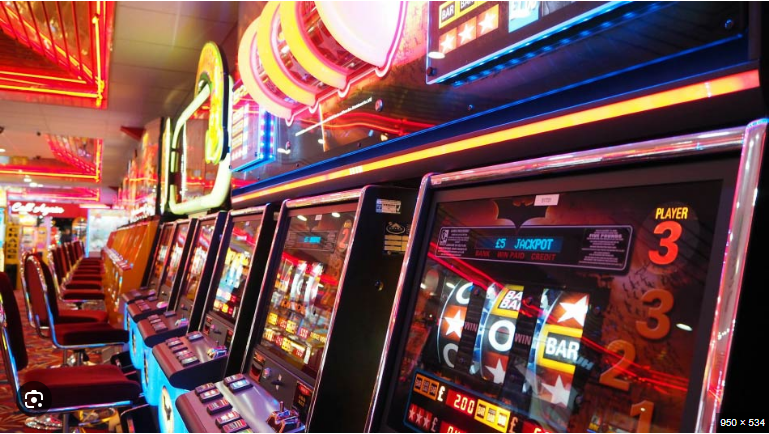
How Bet Size Affects Winning Probability
The bet amount does not change the physical probability of the RNG (Random Number Generator) producing a specific combination, but it does change the effective RTP.
Statistics show that the RTP for many machines at the minimum bet is only 88% - 92%, while switching to the maximum bet (Max Bet) can increase the RTP to 95% - 98%.
Bet Amount
Activating Paylines
Single Line Bet vs. All Lines Bet: Many 25-line or 50-line models allow players to choose which lines to activate. If a player only bets 1 coin, usually only one straight line across the center is valid. Even if high-multiplier symbol combinations appear on other diagonal or zigzag lines, the system will judge them as invalid.
Cost Calculation: Suppose the bet per line is $0.01, and a full 50-line bet is $0.50. A player betting only $0.01 has an effective hit area of only 2% compared to a full bettor. Within the same number of spins, low-bet players lose 98% of potential winning paths.
Symbol Overlap Effect: In 243 Way (All-Ways Win) mode, an insufficient bet amount can cause certain reels to be "locked." For example, only when the bet reaches $0.80 do all 5 reels participate in combination calculations; if the bet is $0.08, perhaps only the first 3 reels are active. This restriction mathematically cuts off the generation of 4-of-a-kind or 5-of-a-kind rewards.
Bonus Symbols
5th Reel Filtering: Many models feature "Extended Bonuses" that require players to land bonus symbols on reels 1, 3, and 5 simultaneously to enter the free game. In low-bet mode, the bonus symbol on the 5th reel may be temporarily blocked by the algorithm, or its random number interval may be significantly compressed.
Wild Symbol Bonuses: Some machines upgrade ordinary Wild symbols to Sticky Wilds or Multiplier Wilds in "High Bet" mode. For example, when betting $1.00, the Wild symbol only replaces ordinary symbols; when betting $5.00, the Wild symbol might come with a 3x or 5x earnings multiplier.
Symbol Upgrade Mechanism: In some machines themed around mythology or adventure, increasing the bet replaces low-value symbols (A, K, Q, J) with high-value golden symbols. This changes the symbol density on the reels, significantly increasing the average win value for high bettors.
Free Spins
Performance during the free spin phase is also constrained by the bet amount used to trigger that phase.
| Bet Level | Initial Free Spin Multiplier | Extra Doubling Opportunities | Symbol Stacking Density |
|---|---|---|---|
| $0.10 - $0.50 | 1x | None | Low Density |
| $1.00 - $5.00 | 3x - 5x | Yes (increase via retrigger) | Medium Density |
| $10.00 and above | 10x or randomly increasing start | High-frequency retrigger | High Density (easy full-screen matches) |
Retrigger Probability: Statistics find that in free games triggered by high bets, the system has a higher chance of giving "extra 10 spins." This is to compensate for the higher capital consumption rate borne by high bettors.
Special Mechanism Activation: Some complex video slots include "collection mechanisms" (e.g., collect 10 gems to open a super bonus). With low bets, the probability of these gems appearing is extremely low, and players might need 500 spins to complete the collection; with high bets, due to algorithmic tilt, the goal might be reached in just 150 spins.
Jackpot
Contribution and Access: Suppose a progressive jackpot takes a 2% cut per hand. If you bet $0.10, you contribute $0.002; if you bet $100, you contribute $2. To ensure fair distribution, the system uses a "bet check." If the current spin does not meet the minimum jackpot bet, the RNG won't even run the jackpot generation code in the background.
Probability Leverage: Even if some machines allow low bets to participate in the jackpot, the winning probability is proportional to the amount. For example, a $1 bet might have a 1/1,000,000 chance, while a $10 bet has a 10/1,000,000 chance.
Casino operators and developers use feature activation to adjust the player's Lifetime Value (LTV).
Small Bet Defensiveness:
For small-stake players, the machine frequently gives tiny returns below the bet amount (e.g., betting $1 and returning $0.4).
Large Bet Aggressiveness:
For large-stake players, the machine reduces the frequency of tiny returns and concentrates most RTP allocation on feature activations (like high-multiplier free spins).
Jackpot Distribution
Seed and Contribution
Seed Amount: When someone wins the jackpot, it doesn't drop to zero but returns to a preset base amount. This capital is usually reserved by the casino from previous cuts or invested as an operating cost.
Increment Ratio: Most Wide-Area Progressives set a contribution rate of about 2% - 3%. For every $100 consumed by players, only $97 enters the base game RTP cycle; the remaining $3 is isolated in the jackpot logic.
Multi-level Jackpot Distribution: Modern machines usually divide into Mini, Minor, Major, and Grand levels. Mathematically, the Mini jackpot might take 50% of the total contribution because its high trigger frequency maintains player engagement; while the Grand jackpot, despite its huge amount, often receives less than 10% of the contribution, leading to extremely slow growth.
Bet Amount
Linear Probability Adjustment: If the machine sets the raw trigger chance for the jackpot at one in ten million based on a unit amount, when a player increases the bet from $1 to $2, the algorithm doubles the winning interval of random numbers for that spin in the background.
Threshold Filtering Mechanism: Some older models use a hard threshold. If a player's bet is below a specific value (e.g., $3.00), the system bypasses the jackpot trigger code block. In this case, no matter the RNG result, the player cannot win the progressive jackpot. This leads to small players being mathematically deprived of winning rights after paying the same commission ratio, causing their actual RTP to shrink significantly.
Expected Value
The growth of the jackpot amount changes the mathematical nature of the game, even making the EV exceed 100%.
Break-even Point Calculation: Every jackpot has a mathematical "break-even point." When the jackpot accumulates enough so that (winning probability × jackpot amount) is greater than (bet cost - base game loss), the machine enters a positive expected value state.
Advantage of High Bets: High bettors, because they can cover all jackpot levels, have far more opportunities to hit positive expectation than low bettors. Statistics show that professional Advantage Players (AP) usually intervene only after the jackpot reaches a certain level, using large bets to lock in the highest mathematical expectation during that period.
RNG
The distribution of the jackpot is not decided when the reels stop, but at the instant the start button is pressed.
Millisecond Decision: The RNG generates thousands of random sequences per second. When you press the spin key, the system draws a specific random number. If this number falls within the extremely small interval preset for the "progressive jackpot," the system immediately locks that prize and displays the corresponding animation on the screen.
Timestamp Interference: Some distributed jackpot systems rely on a central server timestamp. Thousands of machines worldwide compete for the same random number interval. In this competitive environment, a player with a larger bet is equivalent to having more "raffle tickets," with a higher probability of occupying the winning interval first within the same timeframe.
Jackpot Pool
Because a portion of funds is allocated to the jackpot, the payouts for basic spins are inevitably compressed.
| Player Type | Base Game RTP | Jackpot Contribution Share | Effective Total Expectation |
|---|---|---|---|
| Small Bettor | 88.5% | 3.0% (Ineligible) | 85.5% |
| Standard Bettor | 88.5% | 3.0% (Partial Trigger) | 91.5% |
| Max Bettor | 88.5% | 3.0% (Full Trigger) | 96.8% (fluctuates with jackpot growth) |
As seen from the table above, small bettors unknowingly bear the cost of building the jackpot pool without enjoying the same probability of return.
Detailed Explanation of Jackpot Mechanisms
The triggering of the jackpot is completed by the PRNG (Pseudo-Random Number Generator) within milliseconds, with a single spin calculation cycle usually taking 0.05 seconds.
Big prizes are usually decoupled from the RTP (Return to Player), and their mathematical expectation is determined by the contribution rate (Contribution Rate), usually accounting for 1% to 8% of the bet amount.
For fixed jackpots, the system uses virtual reels (Virtual Reels) to set the mapping ratio of winning symbols at 1/64,000,000 or even lower, while progressive jackpots rely on an overflow pool (Overflow Pool) to ensure the regeneration of seed bonuses.
Jackpot Triggering
Virtual Reel Mapping
In the era of physical reels, the number of symbols on a reel was limited by physical space, usually 20 to 22 stop points.
Physical vs. Virtual Ratio: A physical reel might only show 20 symbols, but the virtual reel corresponding to the PRNG might have 256, 512, or even 1024 stop positions.
Weight Allocation: The algorithm assigns unequal weights to different symbols. Ordinary symbols might occupy 30 points on the virtual reel, while a jackpot symbol only occupies 1.
Mathematical Probability Calculation: In a 5-reel model, if each reel has 128 virtual stop positions and only 1 jackpot symbol per reel, the trigger probability is $(1/128)^5$, which is 1/34,359,738,368. This massive denominator ensures the jackpot amount has enough time to accumulate through player bets.
PRNG
The jackpot determination does not happen when the reels stop, but at the instant the player clicks the "Spin" button.
Seed Value: The PRNG relies on the system clock or hardware noise to produce a seed value. The algorithm runs thousands of cycles per second.
Value Interception: When the player presses the button, the system immediately intercepts the current random value. For example, if the system needs coordinates for 5 reels, it will consecutively intercept 5 integers within a specific range.
Result Predetermination: At this point, whether a jackpot is generated is already determined by the mathematical result. Subsequent animations (reels spinning, near-miss sound effects) are just delayed displays for visual experience.
Mystery Jackpot Algorithms
Trigger Parameter Setting: When the jackpot starts, the algorithm randomly selects a trigger amount $T$ within a preset range (e.g., $5,000.00 to $10,000.00).
Contribution Accumulation: Each bet amount $B$ increases the current jackpot $A$ based on the contribution rate $C$ (usually 1.2% to 2.0%).
Judgment Equation: The trigger condition is $A + (B times C) ge T$.
Allocation: Whomever's bet causes the result to reach or exceed the preset $T$ value, the system assigns the jackpot to that account. This mechanism ensures the jackpot must drop before reaching its upper limit.
Bet-Based Weighting
For fairness, high bettors should receive a higher win frequency.
| Bet Amount ($) | Single Spin Win Probability (Example) | Expected Trigger Spins |
|---|---|---|
| 0.25 | 1 / 1,000,000 | 1,000,000 times |
| 1.00 | 1 / 250,000 | 250,000 times |
| 5.00 | 1 / 50,000 | 50,000 times |
| 10.00 | 1 / 25,000 | 25,000 times |
Linear Probability Adjustment
The algorithm usually uses "Bet Amount / Max Bet" as a multiplier for the win probability.
If the max bet is $10.00 and a player bets $1.00, the algorithm's judgment chance for triggering the jackpot automatically drops to 10% of the maximum.
Tiered Jackpot Access: Some models have four jackpot levels: Mini, Minor, Major, and Grand.
Low bets might be algorithmically excluded from the Grand jackpot, retaining only eligibility for Mini and Minor.
Fund Allocation
Base Returns
Base Game Allocation: This portion of funds (usually over 85% of the bet) is used to pay for regular symbol combinations. This includes small 3-of-a-kind, 5-of-a-kind matches, and regular rewards in Free Spins.
Jackpot Increments: Every time a player clicks the spin button, the system automatically peels off a portion of the bet. For example, in a model with a 3% contribution rate, for every $100 bet, $3 is permanently removed from base returns and enters the jackpot calculation sequence.
Mathematical Expectation Shift: Because this money is locked in low-probability jackpots and doesn't participate in daily small returns, jackpot-type slots have a much lower "felt win rate" during the base game phase than ordinary machines.
Internal Split
Modern Linked Jackpots usually contain multiple levels, with different fund allocation ratios for each.
| Jackpot Level | Typical Name | Contribution Share (Example) | Trigger Frequency Expectation |
|---|---|---|---|
| Level 1 | Mini / Minor | 1.5% | Multiple times per hour |
| Level 2 | Major | 0.8% | 1-2 times per week |
| Level 3 | Grand / Mega | 0.5% | Monthly or quarterly |
| Reserve | Seed/Reserve | 0.2% | Only for resets |
Seed Money
Upfront Funding: When a machine first goes live, the operator puts in a fixed amount (e.g., $500,000) as a seed.
Recouping Mechanism: The "reserve fund" portion of the allocation model continues to operate. Until the total of the reserve fund pool equals the initial seed money invested, the machine isn't considered to be in the "pure profit contribution phase."
Overflow Logic: When the reserve fund pool exceeds the preset seed amount, the excess enters the overflow pool. When the next jackpot drops, funds from the overflow pool serve as the extra starting reward for the next jackpot, making the seed amount look higher than officially claimed.
If a machine's total RTP is set to 92%, and the jackpot contribution is 5%, then the base game RTP is only 87%.
Before winning the jackpot, the player's capital consumption rate is calculated based on a 13% house edge.
Betting Thresholds
Classic 3-Reel Models
1 Coin: Only activates the base paytable; the top jackpot combination might only pay 1,000x.
2 Coins: Doubles base payouts; the top combination pays 2,000x.
3 Coins (Max Bet): Activates the Progressive Jackpot. At this point, the same top combination might pay $50,000 or more.
Video Slots
Calculation Model: Suppose the system-set base jackpot trigger probability is $P$, the maximum bet is $B_{max}$, and the player's current bet is $B_{current}$.
Actual Trigger Chance: $P_{actual} = P times (frac{B_{current}}{B_{max}})$.
If a player bets $0.50, their chance of hitting the Grand jackpot is 1 / 1,000,000.
If a player increases to a $5.00 bet, within the same second, their hit chance is corrected in real-time by the algorithm to 1 / 100,000.
Paylines
Some jackpot models require all paylines to be active (e.g., 25 lines or 243 Way) to be eligible for the jackpot wheel game.
Unit Cost Allocation:
| Active Lines | Bet Per Line ($) | Total Bet ($) | Jackpot Eligibility | Theoretical Return (RTP) |
|---|---|---|---|---|
| 1 | 0.05 | 0.05 | No | 88.5% |
| 10 | 0.05 | 0.50 | No | 88.5% |
| 25 (MAX) | 0.05 | 1.25 | Yes | 94.2% |
If a player reduces the number of paylines to save budget, while the cost per spin decreases, they lose the algorithmic entry ticket to the high jackpots.
Symbol Tiers
Some advanced models introduce a "Golden Symbols" mechanism, which is a disguised betting threshold.
Tier 1 Threshold: Base bet, only supports the Minor jackpot.
Tier 2 Threshold: Increase bet by 30%, upgrading 2 high-value symbols to Golden symbols, unlocking Major jackpot access.
Tier 3 Threshold: Increase bet by 100%, all high-value symbols become Golden, unlocking the Grand jackpot.
Under this model, even if the player spins while the jackpot is large, if he hasn't upgraded the symbol tier through an extra "Side Bet," the system automatically filters out the corresponding high-level jackpot segments when judging PRNG values.
The Mathematical Principles Behind Casino Operations
Casinos operate by setting a house edge of 2% to 15%.
Operators ensure that after millions of samples, the actual gross profit infinitely approaches the theoretical deviation.
Slot machine winning probabilities are calculated by combinatorial mathematics.
For example, a 3-reel 20-symbol setup generates $20^3=8000$ combinations, determining its return rate (RTP) performance from 85% to 98%.
Asymmetry of Payout Ratios and Probabilities
Static Odds
In games with fixed rules like Roulette or Craps, asymmetry is manifested by the presence of "green spaces" or "any craps."
European Roulette Analysis:
Total Numbers: 37 (1-36, plus 0).
Single Number Win Probability: $1/37 approx 2.7027%$.
Fair Payout Standard: For zero expected value, the casino should pay $1:36$ (returning 37x principal).
Actual Payout Multiplier: $1:35$ (returning 36x principal).
Asymmetric Gap: In every unit bet, $1/37$ of the amount is removed by this odds design.
American Roulette Double Distortion:
Total Numbers: 38 (adds 00).
Single Number Win Probability: $1/38 approx 2.6316%$.
Actual Payout Multiplier: Remains $1:35$.
Result: This design doubles the asymmetry from 2.7% in European to 5.26%.
Multidimensional Asymmetric Combinations
Non-linear Symbol Frequency: High-value symbols (like 777 or Wild) are distributed much more sparsely on reels than low-value symbols.
Reel A: 30 positions, 2 high-value symbols.
Reel B: 30 positions, 1 high-value symbol.
Reel C: 30 positions, 1 high-value symbol.
Theoretical Win Probability: $(2/30) times (1/30) times (1/30) = 2/27,000 approx 0.000074$.
Payout Hedge: Even if this combination pays 10,000x, its expected value contribution is still $0.000074 times 10,000 = 0.74$.
Conclusion: For every 1 unit invested, the player can only expect to recover 0.74 units on this combination, an asymmetric difference of 26%.
Near Miss Effect Mathematical Disguise: Algorithms often visually increase the frequency of high-value symbols appearing just above or below the stop line. This doesn't change $P$ (probability), but it misleads players' perception of the $P$ value, thereby maintaining betting frequency.
Comparison
As seen in the table below, as the winning probability decreases, the payout asymmetry often tends to expand:
| Win Type | Real Math Probability (P) | Theoretical Fair Odds (1/P) | Actual Casino Payout | Expected Value Contribution (EV) |
|---|---|---|---|---|
| Small Prize (Small Pair) | 12.5% | 8.0x | 5.0x | 0.625 |
| Mid Prize (3-of-a-Kind) | 2.1% | 47.6x | 30.0x | 0.630 |
| High Prize (4-of-a-Kind) | 0.04% | 2500x | 1200x | 0.480 |
| Jackpot | 0.00001% | 10,000,000x | 5,000,000x | 0.500 |
Blackjack
Source of House Advantage: The player busts before the dealer. If both the player and the dealer exceed 21 in the same round, even if the totals are the same, the player still loses the bet.
Insufficient Odds Compensation:
Natural 21: Payout is usually $3:2$.
Win Rate Bias: Using Basic Strategy, the player's win probability is about 42.22%, push probability is 8.48%, and loss probability is 49.10%.
Math Vacuum: Although the $3:2$ payout increases player returns, the overall return rate is still locked around -0.5% due to the dealer's advantage on ties and bust rules.
Progressive Jackpots
To create huge jackpots, casinos lower the base game RTP, for example, from an ordinary 95% down to 88%.
For every 1 Euro a player bets, perhaps 0.02 to 0.05 Euro is funneled into the jackpot.
Most systems require a "Max Bet" to activate jackpot eligibility.
If players only make small bets, they are essentially paying that ultra-low 88% return rate while completely losing the chance for an asymmetric excess return.
Combinatorics and Reel Configuration
Physical Reels and Virtual Stop Points
Early mechanical slots were limited by physical space, each reel usually holding about 20 to 22 symbols.
Physical Representation: The player sees a reel with 20 symbols on the screen.
Mathematical Core: The Computer Random Number Generator (RNG) selects from a virtual axis containing 128, 256, or even 512 stop points.
Weight Allocation:
Blank Symbol: Corresponds to 100 points on the virtual axis.
Low-score Symbol (Cherry): Corresponds to 20 points on the virtual axis.
High-score Symbol (777): Corresponds to 1 point on the virtual axis.
Probability Distortion: This mapping means that even if "777" and "Blank" each occupy one slot on the physical reel, the probability of them being selected differs by 100 times.
Scaling Combinatorial Space Calculation
For a standard 5-reel slot machine, assume the number of virtual stop points mapped per reel is $N$:
Total Combinations ($T$): $T = N_1 times N_2 times N_3 times N_4 times N_5$.
5-reel 64-point setup: $64^5 = 1,073,741,824$ (approx. 1 billion combinations).
5-reel 128-point setup: $128^5 = 34,359,738,368$ (approx. 34.3 billion combinations).
When total combinations reach the level of tens of billions, casinos can set extremely high prize amounts (e.g., 1 million times payout) without changing the game's appearance, because the mathematical probability of that combination occurring is only one in several billion, ensuring the payout expectation remains controlled.
Probability Gradient Design for Winning Combinations
Designers construct a multi-level reward structure by adjusting the proportion of different prizes within the combinatorial space.
| Prize Level | Qualifying Combinations | Occurrence Probability ($P$) | Typical Payout Multiplier | Expected Value Contribution (RTP %) |
|---|---|---|---|---|
| Grand | 1 | 0.0000001% | 500,000 | 0.05% |
| Major | 50 | 0.000005% | 10,000 | 0.05% |
| Minor | 10,000 | 0.001% | 500 | 0.5% |
| Mini | 1,500,000 | 0.15% | 50 | 7.5% |
| Small | 200,000,000 | 20.0% | 4 | 80.0% |
Through this distribution, over 80% of the return rate is allocated to frequently appearing small prizes, providing players with psychological feedback of "winning," though in reality, most players' funds are diluted by high-frequency, low-amount consumption.