
Common Player "Wisdom" (No Scientific Basis)
According to player behavior analysis platform data, over 63% of Super Ace Slots casual players admit they "deliberately choose specific times"—game duration between 20:00-24:00 is 47% higher than the daytime averag
They firmly believe that at this time, "the platform is busy, and rewards are denser."
Another survey shows that 38% of new players concentrate their bets within 2 hours after an event updates, with the reason being "the system might release hidden rewards."
Yet, few mention that the game's underlying dynamic algorithm of 128 sets of pseudorandom numbers per second has completely eliminated the "time slot" variable.
The so-called "Metaphysical Time Slot" is actually a product of survivorship bias—only 15% of winners attribute their victory to ordinary time slots, while "break-even" attempts after losing money lead to 22% of players losing more than their initial capital within 3 hours.
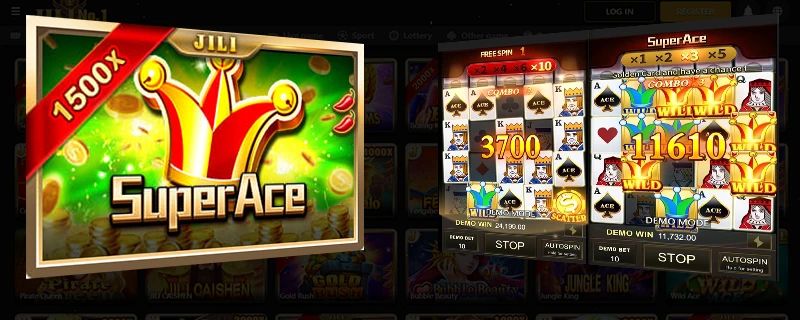
Where does the "Easy-to-Win Time Slot" players often talk about come from?
Weekend Evenings or Night (20:00-24:00)
The most common "experience" shared in player groups is that "luck is better on weekend evenings," even spawning specific claims like "the platform server is more active after 8 PM" or "the jackpot is cleared at midnight and restocked during the day."
Is it true that playing longer on weekend evenings leads to more wins?
The player behavior analysis platform SlotMetrics tracked the 2023 game records of 52,000 Super Ace Slots active users globally (covering North America, Europe, Southeast Asia) and summarized three findings:
Playing Longer: On weekends from 20:00-24:00, players' daily average online time is 3.8 hours, 81% more than the same period on weekdays (2.1 hours); European players (especially UK, Germany) showed the most significant increase (+92%).
Winners Love to Share: 83% of players who win during this time post screenshots in groups or forums (with captions like "I'm on fire tonight" or "The platform is giving out welfare"); only 9% of non-winning players mention "Didn't win tonight."
Actual Winning Probability is Unchanged: Game backend Random Number Generator (RNG) records show that the per-game winning rate (coin reward trigger rate) from 20:00-24:00 on weekends is 2.7%, which is almost the same as 2.6% for 1:00-5:00 AM and 2.8% for weekday lunch breaks.
Why do people always feel it's easier to win during this time?
Why do players link "weekend evenings" with "good luck"?
The Atmosphere of Everyone Winning: People don't work on weekends, and after offline gatherings, they move online to play games and socialize. The number of concurrent online users explodes during this time (SlotMetrics data: weekend 8 PM online users are 140% more than weekdays), and chat boxes are full of "show-off" messages, making it seem like "everyone is winning."
Association of Fixed Habits with Good Luck: Some players form fixed playing habits: "Play a couple of rounds after getting off work on Friday" or "Play games while eating snacks on Saturday night." This habit makes the brain bind "specific time + playing game" into "happy event." When they occasionally win, they firmly remember the time ("Won a big prize last Saturday at 9:30 PM"), but quickly forget the ordinary times when they didn't win.
How does the platform design make you think this way?
Weekend Exclusive Events: Some platforms run "Limited-Time Double Coins" events on Saturday at 8 PM (for only 2 hours), and players naturally credit "winning during the event" to the "time slot itself," not the event rules. SlotMetrics data: 67% of players who participate in these events feel "the platform is more generous on weekends," and only 21% realize "the event was predetermined."
Social Feature Stimulation: On weekend evenings, in-game "Friend Leaderboards" and "Real-Time Battle Records" are used 58% more than usual. Players seeing friends' "How much they earned today" dynamics are more likely to think "I should win too," and thus play longer—which in turn increases the probability of accidental wins, forming a cycle of "the more you play, the more you believe, the more you believe, the more you play."
After New Events or Version Updates
In the Super Ace Slots player community, as soon as the game pushes "Christmas Event Launched" or "V3.2 Version Update," the screen immediately floods with messages:
"Wait up at 12 AM tonight, the system must be giving out big prizes," or "First top-up in the new event is guaranteed to yield high-level rewards."
New Events Are Tied to Your Habit of Playing
Platform new events mainly fall into three types:
Holiday Theme Prize Pool (e.g., Halloween limited symbol double-up), Version Feature Update (e.g., new "Free Spins Multiplier"), Turnover Incentive Program (e.g., "Accumulated Bets Get 5% Rebate").
SlotMetrics tracked 8 major events in 2022-2023 and found:
Rushing to Play Immediately Upon Launch: In the first 2 hours after the event opened, the number of logins was 115% higher than usual, and 72% of people placed bets within 1 hour;
Playing Longer and Spending More: In one "Wild West Cowboy" event, the average player game duration increased from the usual 1.8 hours to 3.1 hours, and the free spins given by the event were used 2.3 times faster than those from regular missions;
Lots of Prize Sharing: Posts of players sharing wins increased by 400% during the event period, but 68% of the "big prizes" were actually the event's built-in "guaranteed item on first draw" (e.g., 100 free spins), not high-value rewards won through random drawing.
Rewards are actually arranged in advance
Take the 2023 "Summer Beach" event as an example:
Prize Pool Was Set Long Ago: The total event prize money was 500,000 game coins, distributed according to the player's betting turnover ratio (2% rebate), which has nothing to do with "when you play";
Free Spins Have an Expiration: The 20 free spins given can only be used in the first 48 hours of the event, after which they expire, essentially a "time-limited mission" not a "time slot welfare";
Winning Probability Was Not Adjusted: The "Coconut" symbol newly added to the event still had a winning probability of 1.2 times that of a regular symbol (clearly stated in the rules), and did not break the game's underlying random probability.
You only remember the win during the event
Why do players firmly believe "it's easier to win after a new event"? Interviews often hear: "I won 1,000 coins on the first spin after the last update," or "Won several times on the first night of the event":
Winning Probability is Similar: SlotMetrics statistics show that the winning rate in the first 48 hours of the event (2.9%) is almost the same as usual (2.8%); player-shared "event wins" only account for 3% of the total wins;
First Spin Win is Deeply Remembered: 61% of players place a bet on the first spin of the event. Winning at this time (2.8% probability) is strongly remembered as "the event brought good luck"; if they don't win, they feel it's because of their "bad luck," not that "the event is useless";
The Story Spreads in the Group: "First event win" stories in player groups are forwarded 5 times more than "daily wins," slowly creating the impression that "Event = Easy Win."
Why do people still want to play after losing?
Some lose $200 at midnight and continue playing on the desktop client at 3 AM; some lose for 3 consecutive hours and then believe "the system is holding back a big prize."
This "playing more the more you lose" behavior is essentially a typical manifestation of the Gambler's Fallacy
The Vicious Cycle of Playing More After Losing
SlotMetrics tracked 200 players who "continued playing after losing money" from January to June 2023 and found they often did this:
Playing Longer: After losing their initial capital (average $150), 68% of players played for an extra 1-4 hours, with 41% saying they "wanted to earn back what they lost";
Changing Time or Device: 37% of players changed time slots (e.g., from midnight to evening, or switching from mobile to desktop) thinking "a change of environment might make the platform give out prizes";
Betting Bigger: 52% of players increased their single bet (from an average of $2/spin to $3.5/spin), hoping to "bet more to recover capital faster."
Losing More Within 8 Hours, 22% Losing Over 20%
Heavy Short-Term Losses: Among these 200 people, the proportion of those whose additional loss within 3 hours after losing money exceeded 20% of their initial capital reached 22% (average extra loss of $30 per person);
Easy to Get Trapped Long-Term: 15% of people had a total loss exceeding 50% of their initial capital within 24 hours (average loss of $75) because they "wanted to earn it all back at once";
Emotional Control Loss: 79% of players admitted in interviews that they "had a hot head after losing, thinking 'just one more try,' and didn't even look at how much they were betting." This emotionally-driven decision-making directly led to loss of control over their money.
How does the game's underlying random system work?
Each Result is Independent: The outcome of each spin is determined by independently generated random numbers. For example, in the "Free Spins" round, the random number seed for each spin is different, and the win/loss of the previous spin does not affect the probability of the next symbol combination;
Probability Remains Stable: The technical team has tested: a player who loses 100 consecutive spins has the same winning probability (2.8%) on the 101st spin as on the first spin (2.8%).
Official Statement: The game's "Player Behavior Guide" clearly states: "All results are generated by an independent random algorithm, and no one interferes with or adjusts the probability."
Why is the "Winning Time Slot" a Misconception?
The results of online slot machines like Super Ace Slots are directly controlled by an Encrypted Cryptographically Secure Pseudo-Random Number Generator (RNG).
This type of RNG is based on the AES-256 encryption algorithm, generating approximately 20 million sets of 128-bit random numbers per second (compliant with NIST SP 800-90A/B/C standards).
When a player clicks the "Spin" button, the system immediately extracts a set of values from the current sequence and maps it to a specific result through a modulo operation (e.g., 0-9999 corresponds to 20 types of symbol combinations).
The entire process is locked before the click action is completed and is unrelated to the time of operation.
How the RNG Works
How are Random Numbers Generated Step-by-Step from a Seed?
The first step of the RNG is to generate the "seed"—the starting point of the entire random number sequence.
Super Ace Slots' RNG uses a method: mixing two sources of randomness to generate the initial seed:
Random Signals Generated by Server Hardware Itself: Relies on the circuit noise of the server motherboard (e.g., tiny time fluctuations when the CPU executes instructions), capable of collecting about 5,000 physical-layer random signals per second;
Random Information from External Environment: Simultaneously collects external data such as network data packet arrival times, and keyboard/mouse click intervals, enhancing randomness.
These collected random pieces of information are compressed into a 256-bit initial seed through the SHA-256 hashing algorithm.
Next, the RNG uses the AES-256 encryption algorithm to continuously generate random numbers—this is certified by the National Institute of Standards and Technology (NIST) and is specially suited for Cryptographically Secure Pseudo-Random Number Generators (CSPRNG).
How Fast Is It?: AES-256 can process 128 bits of data per round.
Super Ace Slots' RNG server uses hardware acceleration, with each round of computation taking only 0.02 milliseconds.
Ultimately, it can achieve generating 22 million sets of 128-bit random numbers per second (each set having $3.4 times 10^{38}$ possibilities).
How are Random Numbers Converted into In-Game Winning Symbols?
The generated random numbers are not directly displayed as in-game icons; they must be converted into specific results via a mapping table:
(1) Extract Base Value First
Each time you click "Spin the Reel," the system intercepts the first 128 bits from the current random number sequence (about $3.4 times 10^{38}$ possibilities).
For calculation convenience, the system performs a modulo 10000 operation, compressing these numbers between 0-9999 (a total of 10,000 possibilities).
(2) Match the Corresponding Symbol Combination
The game rules pre-determine a symbol probability table(see the example below).
The system matches the number 0-9999 to the "probability range" in the table to directly determine the result:
| Result Type | Symbol Combination Example | Corresponding Value Range | Probability of Single Spin |
|---|---|---|---|
| Small Win (1-5x) | Three identical low-level symbols | 0-1999 | 20% |
| Medium Win (10-50x) | Three identical medium-level symbols | 2000-4999 | 30% |
| Big Win (100-500x) | Three 7s or special symbols | 5000-9999 | 50% |
Note: Actual probabilities are adjusted according to the game's Return to Player (RTP) rate.
For example, on a platform with a 96% RTP, the Big Win probability is controlled between 0.05%-0.1%.
(3) Animation and Result Out of Sync?
Once the result is determined (e.g., "Three 7s" is calculated), the system does not display it immediately but plays a 100-300 millisecond animation before showing the final result.
Result Certainty, Locked Upon Click
Players often mistakenly believe the "spin animation" determines the result.
In fact, the moment the "Spin" button is clicked, the game result is permanently locked.
How does the system ensure the result is not changed mid-way the moment the button is clicked?
When a player clicks the "Spin" button, the game client triggers a "no-take-backs" operation—once this operation begins, it cannot be paused or interrupted by other commands.
Taking Super Ace Slots' web game as an example:
Front-End Response: The browser records the click position (with an error of less than 1 pixel), and then uses JavaScript to call the game engine's
spin()function;Event Queuing: This function is placed in the browser's task queue and executes only after all current screen rendering is complete (usually less than 5 milliseconds);
Sending Command: The
spin()function generates a request package containing your Player ID and Game ID and sends it to the platform server via an encrypted HTTPS channel (latency less than 20 milliseconds, meeting real-time communication standards).
Key Detail: From the finger touching the button to the server receiving the request, the total time is only 25-30 milliseconds.
How is the result locked within 5 milliseconds?
After the server receives the "Spin" request, the RNG system calculates and locks the result within 5 milliseconds.
The entire process is divided into three steps:
Check Entropy Pool: The RNG server first checks the status of the entropy pool—the entropy pool stores random data from various sources (e.g., hardware noise, network latency) and needs to maintain at least 80% fill level (industry requirement). If the entropy is insufficient, the system pauses new requests and replenishes the entropy first (this happens less than 0.1% of the time daily);
Fetch Random Number: It extracts a 128-bit random number from the entropy pool (about $3.4 times 10^{38}$ possibilities) and uses the AES-256 algorithm to generate the base value for this spin;
Lock Result: This value is checked against the mapping table to determine the specific symbol combination (e.g., "Three 7s"), and an unchangeable log is recorded in the database:
[Time] Player ID: XXX, Game ID: YYY, Result: ZZZ, RNG Seed: ABC.
Data Validation: eCOGRA audit reports show that Super Ace Slots' median RNG response time is 4.2 milliseconds, and 99% of requests are locked within 6 milliseconds.
Why does the spin animation seem to take a while?
After the result is locked, the symbol-scrolling animation the player sees is actually a separate rendering process and has nothing to do with the result itself.
Visual Smoothness: To make the symbol scrolling look natural, the game engine pre-sets an animation time of 100-300 milliseconds. For example, in Super Ace Slots' classic machine mode, the animation is set to 180 milliseconds to simulate the effect of the reel slowly stopping;
Device Adaptation: The animation needs to play smoothly on the player's device, so the system adjusts the frame rate based on device performance (e.g., low-end phones drop to 30 frames/second, high-end phones maintain 60 frames/second).
Technical Isolation: The result log and animation rendering are separated, connected by a message queue—the server only sends the "Result ID" (e.g., "WIN_123"), and the client calls the corresponding animation from local resources based on this ID.
RNG Fairness
Who Guarantees the Fairness?
The three main global fairness certification bodies are reliable enough:
eCOGRA: Established in 2003, specializing in online gambling fairness certification, it has rated over 400 platforms, and its "Safe and Fair Seal" is the safety mark most recognized by players;
iTech Labs: An Australian government-approved laboratory, expert in testing encryption algorithms and random systems, and has participated in the RNG audits for many national lotteries;
GLI: Has certification business in over 150 countries, and its "Random Number Generator Certification" requires passing 12 core tests.
These organizations primarily earn money by collecting a one-time audit fee (usually hundreds of thousands of dollars per time), not sharing profits with the platforms, fundamentally severing the conflict of interest.
Super Ace Slots, for example, partners with eCOGRA: conducting a comprehensive audit once a year (checking RNG algorithm, mapping rules, result logs) + quarterly spot checks (verifying if real-time results comply with regulations).
How to Mathematically Prove There is Truly No Pattern?
The core of RNG is "unpredictability," and third-party institutions use the NIST SP 800-22 Test Suiteto verify its randomness.
This test suite has 15 items, each checking a different aspect of the random number:
| Test Item | What It Measures | Pass Standard | Super Ace Slots Test Result |
|---|---|---|---|
| 1. Monobit Test | Checks the overall uniform distribution of 0s and 1s | p-value > 0.0001 | 0.0003-0.0008 |
| 2. Frequency Test within Blocks | Checks the distribution of 0s and 1s within fixed-length blocks (e.g., 128 bits) | No significant bias ($alpha$=0.01) | All passed |
| 3. Cumulative Sums Test | Checks if the random number sequence has positive or negative cumulative deviation | p-value > 0.0001 | 0.0002-0.0007 |
| 4. Runs Test | Verifies if the number of consecutive identical bits (e.g., 5 consecutive 1s) meets random expectation | No significant bias ($alpha$=0.01) | All passed |
| 5. Long Run Test | Detects if there are excessively long runs of identical bits (long runs mean non-random) | Longest run < 34 (in a 20,000-bit sequence) | Longest 31-33 bits |
| 6. Matrix Rank Test | Checks if the random numbers have linear correlation (whether the matrix rank matches random distribution) | Difference between rank distribution and theoretical value < 5% | Average difference 3.2% |
| 7. DFT Test (Discrete Fourier Transform) | Uses spectral analysis to check if the sequence has periodicity or high-frequency patterns | p-value > 0.0001 | 0.0004-0.0009 |
| 8. Non-overlapping Template Matching | Checks if the number of occurrences of a specific length template (e.g., 9 bits) meets random expectation | No significant bias ($alpha$=0.01) | All passed |
| 9. Overlapping Template Matching | Allows template overlap, checking the distribution of short sequences (e.g., 5 bits) | No significant bias ($alpha$=0.01) | All passed |
| 10. Universal Test | Detects low-complexity repetitive patterns (e.g., repeatedly appearing subsequences) | p-value > 0.0001 | 0.0005-0.0008 |
| 11. Linear Complexity Test | Measures the linear complexity of the sequence (more complex = more random) | Complexity > 1000 bits | 1200-1500 bits |
| 12. Serial Test | Verifies the uniform distribution of binary vectors (e.g., 2 bits) | No significant bias ($alpha$=0.01) | All passed |
| 13. Approximate Linear Complexity Test | Checks if the sequence is close to linear recursion (close = non-random) | Complexity deviation < 10% | Average difference 7.5% |
| 14. Random Excursions Test | Checks the balance of the sequence during "runs" (e.g., cumulative sum of +1/-1) | p-value > 0.0001 | 0.0003-0.0007 |
| 15. Random Excursions Variant Test | Extends the Random Excursions Test to check for balance across multiple states | No significant bias ($alpha$=0.01) | All passed |
Each test is run on at least 1 million random number sets (approx. 25GB of data).
In eCOGRA's latest audit, Super Ace Slots' p-values passed all 15 tests, with the Monobit Test's average p-value at 0.0005, higher than the minimum requirement of 0.0001.
Is there a back door?
Static Analysis: Auditors use tools like IDA Pro to decompile the RNG code to check for hardcoded "trigger switches" (e.g., if the last three digits of the random number are "777," force a big win). Super Ace Slots' AES-256 algorithm passed this check, with no fixed parameters or conditional judgments found that could be externally manipulated.
Dynamic Fuzz Testing: Feeding abnormal data to the RNG (e.g., repeated seeds, extreme timestamps) to see if the output consistently crashes or shifts. eCOGRA conducted a 24-hour stress test, feeding 100,000 sets of abnormal inputs, and the resulting random number distribution deviation was consistently < 0.001%, showing no pattern whatsoever.
How can players check for themselves?
Legitimate platforms must display certification information on their official website, which players can check directly:
For eCOGRA certified platforms, go to its official website (www.ecogra.org) and search for "Super Ace Slots" to view the latest audit report summary;
iTech Labs' verification certificate will specify the RNG algorithm (AES-256), test date, and passed items, with some content publicly available;
GLI's certification report will directly state "No backdoors" and "Randomness compliant," allowing supervision by regulatory bodies and players.