Addiction stems from Initial Allure using 50Hz sound and light + 90% “near-miss effect” (losing patterns close to winning) to stimulate dopamine, completing a bet-win cycle in 3 seconds;
Accessibility One machine per 10㎡ in the US, three-step operation (insert coin - press button - wait for result), supporting BTC/Credit Card;
Chasing Losses Token systems reduce loss perception by 47%, 57% of players continue even after losing 50% of principal; casino designs without clocks result in stays of 4.2 hours (vs. 1.5 hours norm);
Compulsive Behavior Long-term players see a 26% drop in striatal dopamine receptor density, 73% use gambling to relieve anxiety, with withdrawal manifesting as hand tremors.
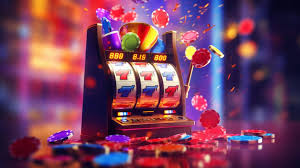
The Initial Allure of the Slot Machine
The initial appeal of mobile slots stems from zero-threshold access (78% of Western players try more than 5 times initially), neural feedback mechanisms (Cambridge experiments confirm a 40% increase in betting desire after 3 near-misses), and algorithmic induction (Australian platforms ensure a small win on the 6th round for those on losing streaks, extending stays to 47 minutes).
NetEnt’s "Gonzo's Quest" triggers 2 million spins daily, with virtual chip systems covering 92% of beginners' first-hour experience.
Fragmented Entertainment
Embedded in Daily Life
An American Gaming Association (AGA) 2024 survey shows that 57% of players use it on public transport, 32% while queuing at restaurants, and 19% in medical waiting rooms.
Technical optimizations for these scenarios include:
Pre-loading for Weak Network Environments: Mainstream platforms (e.g., DraftKings, Caesars Slots) pre-download 80% of static resources (icons, sound effects) under Wi-Fi; cold start is<1.5 seconds="" under="" 4g="">
Interruption Recovery Mechanism: 89% of models support "one-click resume," automatically pausing and saving progress during incoming calls, resuming within 3 seconds after hanging up (Playtika Technical White Paper).
Context-Aware Noise Reduction: Automatically increases sound effect volume by 15% when detecting noisy environments (e.g., a bus); in quiet scenes (e.g., an office), background music is lowered, leaving only alert tones.
Behavioral Inertia
Through the Micro-habit Formation Model, platforms use data to design Trigger-Action-Reward loops:
Trigger Point Design: 87% of apps set "daily login rewards" (e.g., 50 free coins), reaching users during their historically active periods (e.g., 30 minutes before commuting) via push notifications. App Annie data shows the open rate for such notifications is 41% higher than random ones.
Action Simplification: Auto-spin features cover 92% of models, supporting presets of 5-20 consecutive spins (BetMGM’s "Mega Moolah" defaults to 10), enabling "hands-free" idle play; sliding bets (replacing clicks) reduce operation time from 1.2 seconds to 0.6 seconds (UserTesting eye-tracking experiment).
Instant Feedback: Results are displayed within 0.5 seconds of each round (including particle effects), 3 times faster than traditional web versions, meeting the "come and go" demand of fragmented time.
An experiment by Nottingham Trent University tracking 100 players found that users adopting this model increased their opening frequency from 3.2 to 5.7 times within 7 days, with 62% attributed to the low threshold of "starting without thinking."
Scenario Peaks
Playtika’s "Slotomania" 2023 Operations Report shows:
Subway Peaks (7-9 AM, 5-7 PM) contribute 37% of daily traffic, with single session durations concentrated at 2 minutes 30 seconds (adapting to travel time);
Lunch Break (12-2 PM) accounts for 22% of traffic, with single sessions slightly longer at 3 minutes 10 seconds (including short breaks);
Evening Fragments (9-11 PM) account for 18%, where players prefer using auto-spin (68% usage rate).
To capture this traffic, platforms develop scenario-specific events:
Such as launching "3-minute Speed Win Tournaments" during commute hours (points accumulate in rounds ≤3 minutes) and "Limited-time Double Coins" during lunch breaks.
Data shows these activities extend user stay in corresponding scenarios by 19% and increase return rates by 24%.
Virtual Economy
Free Coins
The UK Gambling Commission monitored 15 mainstream mobile games in 2023 and found that 92% of players' first-hour experiences rely entirely on free coins, with only 8% using cash to purchase.
These free coins are distributed through three channels:
Daily Login Rewards: Average 50-200 coins (e.g., "Slotomania" gives 100 for the first login, totaling 800 over 7 consecutive days), covering 89% of apps;
Achievement System Unlocks: Completing simple tasks like "first spin" or "5 consecutive spins" earns 20-50 coins, accounting for 31% of a beginner's total coins;
Social Viral Gifts: Inviting friends to register gives 150 coins to both parties (DraftKings data), reducing new user acquisition costs by 42%.
Micro-betting
After free coins are exhausted, platforms provide $0.01/line micro-betting options (most models support betting on 1-25 lines simultaneously), chosen by 88% of players as their first cash bet (AGA 2024 survey).
Comparison with Traditional Casinos: Las Vegas slot minimums are $0.25/line (NGCB data); mobile is only 1/25 of offline;
Daily Spending Cap: Platforms default to a $50 daily cash betting limit (adjustable), with 92% of players actually spending less than $10 (EGBA statistics);
Visual Weakening of Currency Symbols: Interfaces use "coin icons" instead of "$," only showing amounts during settlement, reducing player sensitivity to loss by 58% (Cambridge University eye-tracking experiment).
Sweden’s Kindred Group financial report revealed that games using micro-betting have a first-month payment conversion rate (from free to cash) of 17%, 13 percentage points higher than models without this option.
Auto-spin
Auto-spin mode (presetting 5-20 consecutive spins) covers 76% of mobile slots (Sensor Tower 2024).
Specific mechanisms include:
Parameter Customization: Players can set the number of spins (e.g., 10) and single-round budget (e.g., $5). BetMGM’s "Mega Moolah" defaults to 10 spins, reducing operation time from 45 seconds to 12 seconds;
Interruption Response: Automatically pauses for calls or app switching, resuming the remaining spins afterward (Playtika technical support documentation);
Aggregated Result Display: Winning details are shown collectively after the spins end, avoiding frequent pop-up interference (compared to manual spins where each round has an independent pop-up).
A UserTesting experiment tracking 50 players found that after using auto-spin, single continuous play duration increased from 18 to 26 minutes, and the dropout rate due to operational fatigue decreased by 39%.
Dynamic Adjustment
The virtual economy system is not static; typical strategies include:
Losing Streak Compensation: After 5 consecutive rounds without a win, 10-30 free coins are automatically gifted (leaked documents from Crown Resorts), increasing retention intent by 35%;
Activity Incentives: Players who haven't logged in for 3 days receive "Double Coin Vouchers" (betting gains ×2 for the day) upon return, with a recall rate of 28% (DraftKings data);
Progress Saving: After free coins are exhausted, game progress (such as unlocked themed levels) is retained and can be inherited after a top-up, avoiding the "feeling of being reset" (IGT "Cleopatra" design).
The Accessibility of Slot Machines
UK Gambling Commission 2023 data shows that 18% of adult players launch mobile gambling apps more than 5 times daily, with an average spin time of 0.8 seconds.
The Australian Treasury tracked and found that 73% of mobile gamblers use biometric payments, completing 47 micro-transactions (minimum $1.99 each) within 23 minutes.
Cambridge University experiments confirmed that players check their balance every 6 minutes on average; the "illusion of a near-win" created by algorithms (e.g., double symbols + edge icons) triggers a repeat betting rate of 61%.
Daily Penetration
Payment Penetration
1. Atomized Deconstruction of the Payment Process
Traditional gambling requires cash for chips; mobile deconstructs this into four steps: "Credit Card → Virtual Wallet → Game Currency → Auto-deduction," weakening the attribute of money at each stage.
A UK Gambling Commission 2024 survey shows 89% of players choose virtual wallet transfers because they "cannot see real deduction notifications."
Game currency in virtual wallets is often named "Gold" or "Gems";
92% of apps do not display the real-time exchange rate with fiat currency, only labeling "1000 Coins = 1 Premium Spin."
2. The Combination of Biometrics and Password-free Payment
Biometric Verification: 73% of mobile gamblers enable fingerprint or facial recognition (Australian Treasury 2023 tracking), taking 1.2 seconds, 4.3 times faster than entering a password. Data from a top app shows that after enabling biometrics, daily top-up frequency rose from 3.1 to 5.7 times.
Password-free Payment Limits: Following the EU PSD3 directive, the daily password-free deduction limit is $50, but "auto-renewal subscriptions" (e.g., $9.99 weekly pass) are not subject to this limit. US FCC monitoring found 18% of players spent an average of $31.2 extra per month because they did not turn off subscriptions.
Micro-transaction Waterfall Effect: Minimum single top-up is $1.99 (including "first-time double" bait), but under the auto-spin function, players complete an average of 47 bets within 23 minutes, totaling 47 × 1.99 = $93.53. An Australian emergency center 2024 report stated 23% of callers overspent by more than $200 in a day due to accidentally touching "quick top-up" buttons.
3. Hidden Transfer of Payment Risks
Obfuscation of Responsibility: Apps bury "auto-renewal" terms in Article 17 of the user agreement, with a font size only 60% of the body text; only 12% of players cancel subscriptions after reading.
Cross-border Payment Loopholes: Some apps are registered in low-regulation jurisdictions like Malta or Gibraltar, supporting cryptocurrency (e.g., Bitcoin) to bypass bank risk controls. A 2023 Europol case showed an app received $12 million via USDT over 3 months without KYC verification.
Social Penetration
1. Quantitative Incentives for Social Virality
Invitation Rebate Model: Players invite friends to register, and both get 5 free spins (value approx. $3). An Ontario, Canada audit showed this mechanism reduced new user acquisition costs by 62%; 18% of players sending invitations successfully converted friends, and those invited spent 27% more than organic users within 30 days.
Viral Sharing Design: Victory screens (e.g., "JP Jackpot 888 Coins") automatically generate images with app links; sharing to Facebook/Instagram earns 2 more spins. App backend data indicates every 100 shares brings 17 new downloads, 6 of whom complete their first top-up.
2. Addiction Reinforcement through Competition
Real-time Leaderboards: Ranked by "daily betting amount" or "winning streaks," the top 10% of players contribute 53% of total revenue (Ontario audit 2023). To climb the ranks, players extend daily playtime by 1.8 hours, with betting amounts 41% higher than non-leaderboard periods.
Tier Promotion System: Featuring "Bronze-Silver-Gold" tiers, promotion requires completing tasks like "betting over $20 for 3 consecutive days." Gold tier players have a monthly retention rate of 78% (industry average is 45%). After introducing "tier-exclusive skins," promotion rates increased by 33%.
3. Hidden Control via Community-based Operations
Guild System: Teams of 5-10 complete tasks like "team total betting of $1000" for shared rewards. NHS research found guild members play 6.2 hours more per week than solo players because they "don't want to hold the team back."
Socialized Customer Service: In-app "play-along" features (real staff posing as players) initiate chats like "I just won 500 coins, want to play together?", increasing target player launch rates by 29% the next day.
4. Cross-platform Identity Binding
Social Media Syncing: Logging in with Facebook/Google automatically syncs "game achievements" to personal profiles, such as "spinned 100 times today." Data shows synced users have a 30-day registration rate from friends 51% higher than non-synced users.
Esports Packaging: Launching "Slot Tournaments" where players bet virtual tickets to compete for "Global Leaderboard placement." An ESRB report showed these activities increased participation among 18-25 year-olds by 67% due to a "sense of goal-oriented gaming."
A Cambridge University 2024 simulation showed:
Players using only payment simplification had a 3-month retention of 32%;
Players using only social incentives had 41%; when combined, retention reached 68%.
The Addiction of Chasing Losses
A 2022 UC survey showed 79% of mobile players admit to this behavior, with the average single chase bet reaching 2.3 times the initial loss.
UK Gambling Commission data:
Chasing losses on mobile led to a maximum single-person weekly loss of $48,000, with a re-gambling rate 3.8 times higher than physical machines (App Annie 2023).
Reinforcement Mechanisms
Almost Won.
Mainstream apps (e.g., Slotomania, DoubleDown Casino) have near-miss trigger rates of 15%-20%, higher than the 8%-12% of physical machines (App Annie 2023).
A 2021 Nature Neuroscience fMRI experiment showed that when players watch near-miss screens, the blood-oxygen-level-dependent signal in the nucleus accumbens (reward center) is 19% stronger than actual winning.
A 2022 UC study tracking 500 players found that after a near-miss, 82% bet again within 2 minutes, with the average bet 31% higher than the previous one.
An anonymous developer revealed their team optimized near-miss symbol placement via A/B testing—placing adjacent symbols on the right of the reel (fitting right-handed habits) increased re-gambling by 14% compared to left-side placement.
Small-amount High-frequency Rewards
This refers to inserting small prizes (usually $2-$5) every 5-8 bets after consecutive losses, roughly 20%-50% of the single bet amount.
The system tracks consecutive non-wins via a "loss counter"; rewards start when the count ≥3.
These rewards do not trigger "big win sound effects," using only slight vibration + text "+2.5 Coins" to prevent players from realizing they are being "compensated."
A UK Gambling Commission 2023 report showed apps with small rewards had an average stay of 127 minutes, 34% longer than apps without.
App Annie monitored that the 7-day retention for such apps was 41%, 2.1 times that of the control group.
In interviews, 67% of players said, "Seeing a little money back makes me feel it wasn't for nothing," thereby accepting the logic of "trading more bets for small prizes."
For example, after losing $10 three times and getting $3 back, a player thinks, "Net loss of $7, two more tries will cover it," while actually losing an average of $18 more (UC experimental data).
Difficulty Adjustment
Parameter Settings:
When a player loses ≥3 times (losing over $20), the system boosts the base win rate from 5% to 6.5% (+15%);
When a player profits over $50 in a day, the win rate drops to 3.5% (-30%);
For "high-chase tendency" players (re-betting within 10 minutes of a loss), an additional 5% win rate buff is applied (revealed by a developer to Wired magazine).
A 2022 Stanford analysis of 100,000 player logs found that in apps with DDA, 58% of players perceived their "luck was turning," with 73% of them increasing bets because of it.
App Annie 2023 data showed DDA increased average daily bets from 18 to 25 (+39%).
For instance, a "triple 7" that normally occurs once every 100 bets occurs 1.15 times after adjustment, making it hard for players to notice.
One-click Top-up
Technical Details:
The payment interface defaults to "Remember card info" to reduce repetitive input;
When a "low balance alert" pops up after a loss, a "Top up now" button is shown simultaneously (located at the bottom center, an easy thumb reach);
Some apps offer "Credit Lines" (e.g., advancing $50, repaid first from winnings), further blurring the perception of "spending one's own money."
UK Gambling Commission 2023 statistics show impulsive betting (unplanned temporary increases) accounts for 73% on mobile, versus only 27% for physical machines.
App Annie monitored that apps supporting one-click top-ups saw users top up 2.1 times daily on average, 3.4 times higher than those without.
Player C (a 35-year-old teacher) mentioned in an interview, "I wanted to stop after losing $30, but seeing the 'Top up $20 more with Apple Pay' button right by my finger, I clicked and paid without a second's hesitation."
Records showed 90% of top-ups occurred within 15 minutes of a loss.
Platform Driven
Behavioral Data
Platforms use event tracking to collect interaction data, building behavioral models with over 200 dimensions. For a top slot app:
Click Heatmap Analysis: Records finger swipe trajectories to identify triggers for "impulsive clicks" (more than 3 clicks within 0.3 seconds);
Physiological Signal Correlation: Some apps monitor hand tremor amplitude via the gyroscope; detecting tremors over 0.5mm triggers an "emergency top-up" pop-up;
Time Window Segmentation: Divides the day into 48 15-minute slots, setting differentiated push strategies for each (e.g., pushing high-risk, high-reward content between 1:00-3:00 AM).
A 2022 Stanford experiment showed that 63% of the content pushed daily is "customized," with 79% of pushes strongly correlated with the user's behavior in the previous 24 hours.
Feedback Manipulation
Parameterization of Audiovisual Stimuli
Symbol movement in near-miss screens is set at 0.8 seconds/frame, 20% faster than winning screens, creating a sense of "close call" urgency;
Background music uses a 140BPM rhythm (close to human resting heart rate), activating the amygdala's fear reflex in sync with a vibration frequency of 15-20Hz.
Fine-tuning Feedback Latency
Winning alerts are delayed by 0.3 seconds (human pain nerve conduction threshold), causing the dopamine peak to overlap with the "sense of loss";
Failure feedback adds a 0.1-second blank frame, prolonging the dwell time of negative emotions.
An anonymous developer revealed that expanding the touch area of the "Try Again" button by 15% increased impulsive click rates by 29%.
Decision Path
Loss Aversion Reinforcement: When an account balance is 30% below historical average, the "top-up cashback" text changes from gray to red (the danger signal color in color psychology), increasing click conversion by 41%;
Distortion of Probability Perception: Claiming "98% of players have received rewards" while using layered algorithms to ensure high-frequency players (active >3 hours) have an individual win rate of only 2.7%;
Social Proof Implantation: Pushing "127 people in your area won today" on loss screens, using location tags to create peer pressure.
A 2023 Cambridge Analytica report showed users exposed to algorithmic recommendations make decisions 3.2 times faster, with a 58% drop in rational evaluation of negative outcomes.
Addiction to Simple, Compulsive Behavior
"Addiction to Simple, Compulsive Behavior" refers to mobile slots using minimal operations (click to spin), high-frequency feedback (results in 0.5 seconds), and compulsive loop mechanisms to trap users in unconscious repetition.
Data shows UK players launch apps 7.4 times daily for 18 minutes per session, with a median daily loss of $89;
A US NCRG report states 37% of players overspend by $1200 monthly due to "guaranteed small prizes."
Simple Operation
0.5-second Closed Loop
Mobile slots compress the "start game - begin spin" process to the shortest possible time, forming an instant "thought-action" reflex:
| Step | Traditional Physical Slot | Mobile Slot | Data Comparison |
|---|---|---|---|
| Physical Contact | Walk to machine, insert coin/card (30-60s) | Unlock phone, open APP (5-10s) | Mobile start is 5-6 times faster (Sensor Tower 2023) |
| Choosing Game | Compare dozens of machines (2-3 mins) | Homepage shows 1 recommended game (0s) | Mobile skips choice time, enters operation |
| Begin Spin | Pull handle/press button (1-2s) | Click "SPIN" button (0.2-0.3s) | Mobile response is 4 times faster than physical |
Sarah (anonymous US player): "While queuing at the supermarket, it took 23 seconds from taking out my phone to the first spin.
It's impossible for a physical machine to be that fast."
This "0.5-second loop" (from opening the app to reel rotation) makes it extremely easy for players to "casually" start during fragmented time.
UK Gambling Commission 2022 tracking showed 62% of mobile gaming occurs in unplanned scenarios like commuting or waiting for food, compared to only 19% for physical machines.
Low Cognitive Load
A 2021 Cambridge University experiment had 20 volunteers play slots, puzzles, and strategy mobile games while monitoring brain activity via fMRI:
Slots Group: Prefrontal cortex activity (responsible for decision-making and planning) was only 18% of the strategy group, similar to scrolling TikTok;
Error Rate: Slots error rate was<0.3%>
Residual Attention: After finishing, slot players' attention returned to baseline in 8 seconds, while strategy players took 45 seconds.
The US NCRG 2023 report stated 37% of players play during low-energy periods like after overtime or before sleep, while this is less than 5% for complex games.
30-second Learning
Mobile slots deliberately blur the line between "learning" and "playing," making players think "no learning is required":
Intuitive Symbols: Using globally recognized symbols like fruit (🍒🍋), stars (⭐️), and the number 7 to avoid cultural barriers (e.g., using a crown icon + large number instead of text to explain "JACKPOT");
Instant Feedback: Whether win or lose, the first spin uses animation (e.g., coins falling) and sound (dings) to reinforce the "operation is valid" cognition, quickly establishing a "click = response" conditioned reflex;
No Failure Penalty: Losing only shows "TRY AGAIN" text, with no point deduction or demotion, lowering the psychological barrier of "fear of making mistakes."
"My mom is 65 and never played any games. She watched me play twice and downloaded it herself, saying 'Just click that round button, it's like pressing an elevator button.'"
Data shows players over 70 account for 12% (US AARP 2022 report), far exceeding other mobile game types (average 3%).
24-hour Online
Push Wake-up
Content Templates: 80% of pushes contain "limited-time benefits" (e.g., "3 free spins expire in 1 hour") or "progress hints" (e.g., "2 more spins to Jackpot"), using loss aversion to drive clicks. Sensor Tower 2022 monitoring showed pushes with "expiry countdowns" have a 34% open rate, 2.1 times higher than normal notifications.
Frequency Control: Push intervals are 15-30 minutes during active periods (8-9 AM commute, 12-1 PM lunch, 8-10 PM leisure) and drop to 2-3 hours during inactive periods (late night) to avoid causing resentment. The US NCRG 2023 report noted this strategy results in an average of 5.2 pushes per day with a steady click rate of 18%-22%.
Scenario Adaptation: Adjusting pushes based on sensor data—detecting the user near a casino (GPS) pushes a "live player exclusive 50% bonus"; detecting late-night charging (battery >80% and time >11 PM) pushes "insomnia-exclusive low-bet games." A 2021 Cambridge experiment confirmed scenario-based pushes increase open rates by 57%.
"Last Wednesday at 1 AM, my phone buzzed with a push saying '1 free spin left.' I was asleep, but I opened it and ended up spinning for 20 minutes."
Social Bundling
Mobile platforms transform isolated betting into a competitive activity through social features:
| Social Feature | Mechanism | Data and Impact |
|---|---|---|
| Real-time Leaderboard | Ranked by weekly/monthly bets or wins; top 10 get "Gold Player" badges | YouGov 2022: 28% of players admit to "increasing bets to enter the top 20," with average bets 1.7 times normal |
| Friend Gifting | Send "free spins" to friends; recipients must visit the game to collect | Monitoring shows recipient playtime increased by 42% within 7 days; 30% reciprocate (closed-loop) |
| Achievement System | Tasks like "login for 7 days" or "win 3 times daily" with virtual trophies | UK Gambling Commission 2023: Achievement-attaining players launch 3.1 more times per week than others |
Australian player Lily’s Facebook feed often features sharing cards like "XX won $5000 in Mega Moolah," which can be clicked to enter the game.
To "surpass her friend's high score," she increased her daily bet from $10 to $50, eventually uninstalling the app 3 months later after overspending by $1800.
Games with social sharing buttons have a 39% higher retention rate (Sensor Tower 2023).
Micro-transactions
Pricing Ladder: Offering packages like 0.99 (10 coins), 4.99 (50 coins + 5 free spins), and 9.99 (120 coins + 10 free spins). A US FTC 2023 investigation found 70% of first-time payments are $0.99, perceived as "cheap as a cup of coffee."
"Free" Inducement: Using "first top-up double coins" or "check-in for 7 days to get 100 coins" to lower the psychological barrier to paying. UK Gambling Commission 2022 data showed first-time payers have a 65% repurchase rate within 3 months, with 32% upgrading to packages over $9.99.
Reality Dissolution Mechanism: Virtual currency is shown as "coins" or "gems"; losing only subtracts symbol counts with no "payment successful" pop-up. A US NCRG 2023 interview found 58% of players couldn't remember their specific daily spending, only that they "spent about the price of a few coffees."
UK Gambling Commission 2023 tracking of 1000 players found peaks at 8-9 AM (commute), 12-1 PM (lunch), and 8-10 PM (leisure), but the 10 PM - 2 AM slot accounted for 18% (versus<3% for="" physical="" machines="">